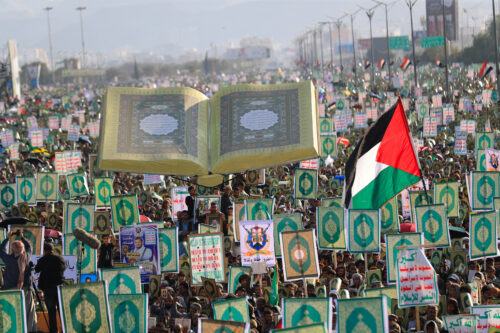
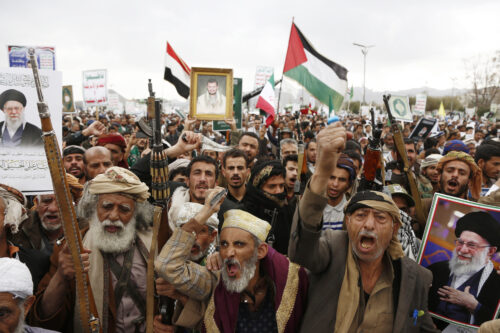
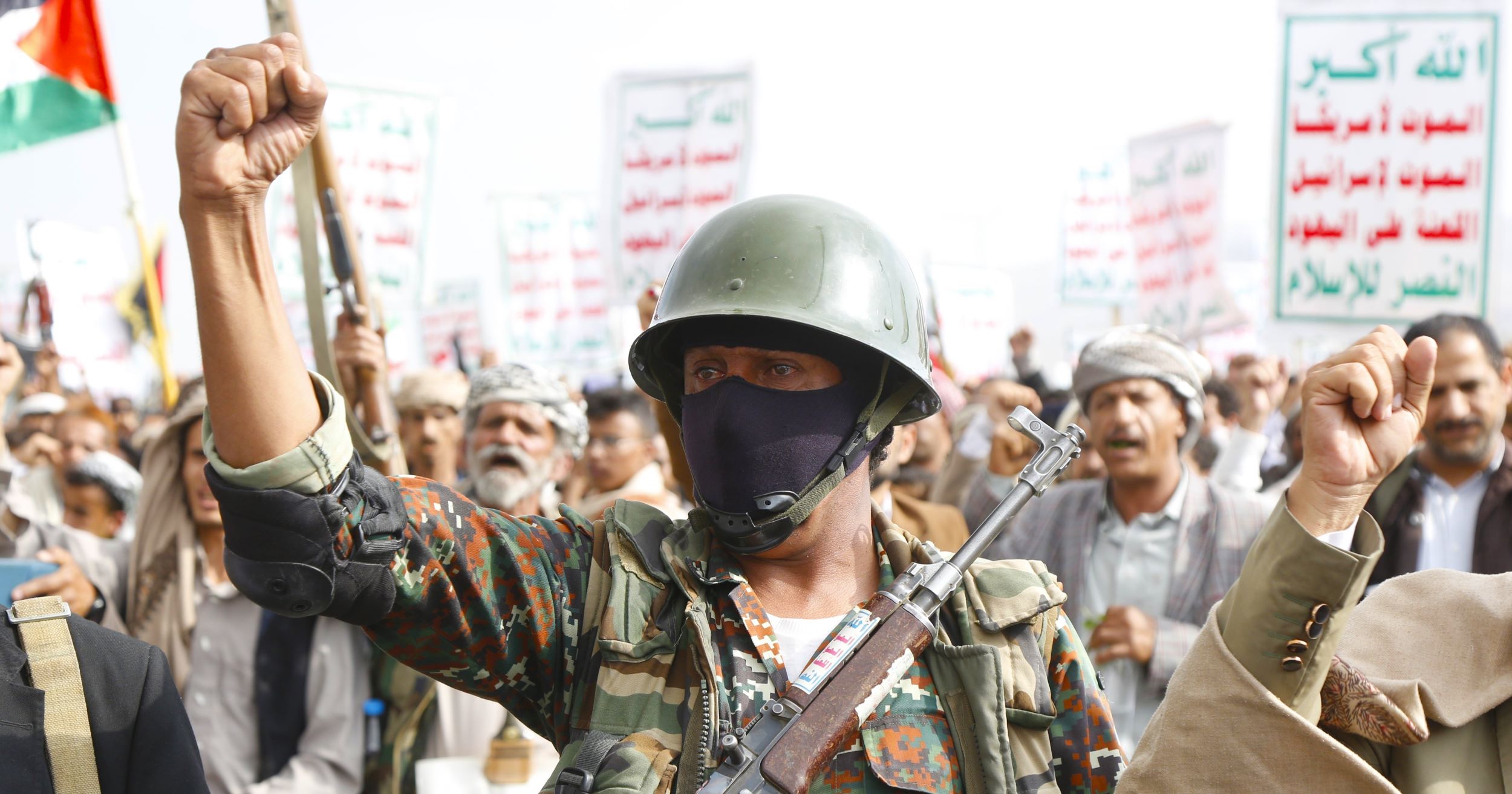
The Houthis are a political-military faction and Zaydi religious movement founded in northwestern Yemen in the 1980s. A key member of Iran’s Axis of Resistance with links to other militant organizations in the Arabian Peninsula and the Horn of Africa, the group has continued to pose a threat to Western interests on a global scale.
Despite claiming they are poised to attack, the Yemeni Houthis have yet to join Iran and its other proxies in their fight against the United States and Israel. Hosts Alistair Taylor and Matthew Czekaj speak to MEI Associate Fellow Nadwa Al-Dawsari to unpack why the Houthis continue to stay on the sidelines of the Iran war and what might prompt them to join the fray. They also discuss the Houthis’ evolving role within the Axis of Resistance, what the Yemeni group has learned from its earlier rounds of direct conflict with Israel and the US, as well as whether its actions could precipitate a renewed flareup in Yemen’s civil war.
Iran’s insurance policy: Why the Houthis have stayed out of the fight
Nearly two weeks into the Iran war, one of Tehran’s most capable and disruptive regional allies, Yemen’s Houthi movement, has not entered the fight. The Houthis’ restraint reflects a strategic calculation by Iran’s Islamic Revolutionary Guard Corps.
The Houthis are a political-military faction and Zaydi religious movement founded in northwestern Yemen in the 1980s. A key member of Iran’s Axis of Resistance with links to other militant organizations in the Arabian Peninsula and the Horn of Africa, the group has continued to pose a threat to Western interests on a global scale.
Despite claiming they are poised to attack, the Yemeni Houthis have yet to join Iran and its other proxies in their fight against the United States and Israel. Hosts Alistair Taylor and Matthew Czekaj speak to MEI Associate Fellow Nadwa Al-Dawsari to unpack why the Houthis continue to stay on the sidelines of the Iran war and what might prompt them to join the fray. They also discuss the Houthis’ evolving role within the Axis of Resistance, what the Yemeni group has learned from its earlier rounds of direct conflict with Israel and the US, as well as whether its actions could precipitate a renewed flareup in Yemen’s civil war.
Iran’s insurance policy: Why the Houthis have stayed out of the fight
Nearly two weeks into the Iran war, one of Tehran’s most capable and disruptive regional allies, Yemen’s Houthi movement, has not entered the fight. The Houthis’ restraint reflects a strategic calculation by Iran’s Islamic Revolutionary Guard Corps.
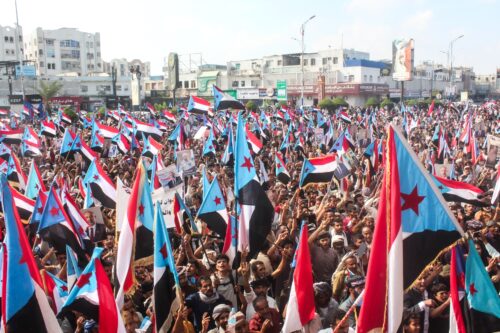
Saudi Arabia has stepped up its efforts to unify and restructure Yemen’s anti-Houthi forces after the rapid expansion and sudden implosion of the United Arab Emirates-backed secessionist Southern Transitional Council following Abu Dhabi’s military withdrawal from the country.
This bonus episode of Middle East Focus features an excerpt from a recent MEI Virtual Briefing recorded on January 20. Director of Communications Zeina Al-Shaib is joined by MEI Affiliate Fatima Abo Alasrar and Associate Fellow F. Gregory Gause III to discuss the dramatically changing dynamics in Yemen’s civil war. Last month, Yemen emerged as a focal point of rising tensions between Saudi Arabia and the United Arab Emirates. The Southern Transitional Council, a UAE-backed southern separatist movement, has disbanded in recent weeks, following fierce clashes with Saudi-backed forces. In the conversation, Alasrar and Gause analyze the political, security, and socio-economic shifts affecting Yemen’s internal dynamics and what all this means for regional stability.
From coalition to confrontation: Saudi-UAE rivalry in Yemen and its regional implications
The final days of 2025 marked a turning point in the Middle East, as competition between Saudi Arabia and the United Arab Emirates in Yemen spilled out into the open. Tensions between the two coalition partners, which jointly launched a military intervention in Yemen in 2015, have simmered for years and are now rapidly escalating, with far-reaching implications for both Yemen and regional security more broadly.
Iran’s Axis of Resistance after the 12-day war: Adaptation, restructuring, and reconstitution
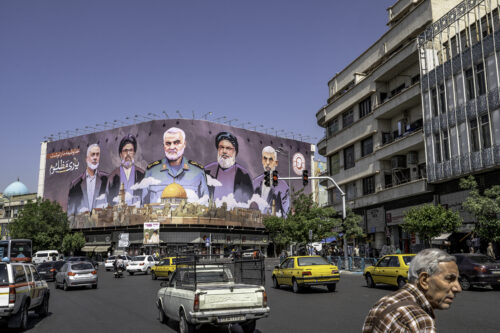
Since Israel’s 12-day war against Iran, Tehran and its network of regional proxies and non-state allies, the so-called Axis of Resistance, have entered a phase of strategic dormancy — an outward calm concealing rearmament, financial adaptation, and ideological renewal.
This backgrounder provides an overview of the Axis of Resistance, a loosely aligned network of armed groups and state actors led and supported by Iran to project its influence and military strength across the Middle East.
The legitimacy trap: How international institutions sustain the Houthis’ hold on Yemen
For years, the prevailing assumption was that the Houthis’ survival depended on battlefield victories and Iranian support. Both are essential, but there is a third critical and often overlooked factor: the weaponization of international engagement. In a pattern that continues to repeat itself, engagement without accountability strengthens rather than moderates Houthi behavior.
The balance of power in Yemen after the US-Houthi cease-fire
The May 6 cease-fire between the United States and the Houthi militia in Yemen has had a consolidating effect on the balance of power inside the war-torn state and hardened the status quo of the country’s civil war. In turn, the outcome of Israel and Iran’s subsequent 12-day war has the potential to temporarily shake up this status quo once again; but Yemen’s fracturing anti-Houthi coalition is unlikely to be able to exploit that opportunity.
Back to reality: Gravity remains in place after Trump’s trip
The harsh realities of the region’s threats and challenges, like Iran and the Gaza war, stubbornly persist following the pomp and circumstance of Trump’s “spring bling” tour, which featured eye-popping dollar figures and an offer of a luxury jumbo jet from Qatar.
US-Houthi Ceasefire Deal & the Future of Red Sea Security
The sudden announcement of a US-Houthi ceasefire, brokered by Oman, has halted Washington’s air campaign in Yemen and raised urgent questions about the future of Red Sea security. What prompted the deal, and what are its implications for maritime shipping, regional alliances, and the trajectory of Yemen’s civil war? This episode explores the strategic motivations behind the ceasefire, the role of Iran and Saudi Arabia, and how the Houthis could leverage the pause to regroup and expand their influence across the Horn of Africa.
A midstream appraisal of Trump’s historic Middle East trip
One of the strategic thrusts of the opening months of Trump’s second terms has been aimed at deepening America’s economic engagement with the leading economies of the Gulf. Thus, the first leg of his trip to the region resulted in a template for deeper US-Saudi ties.
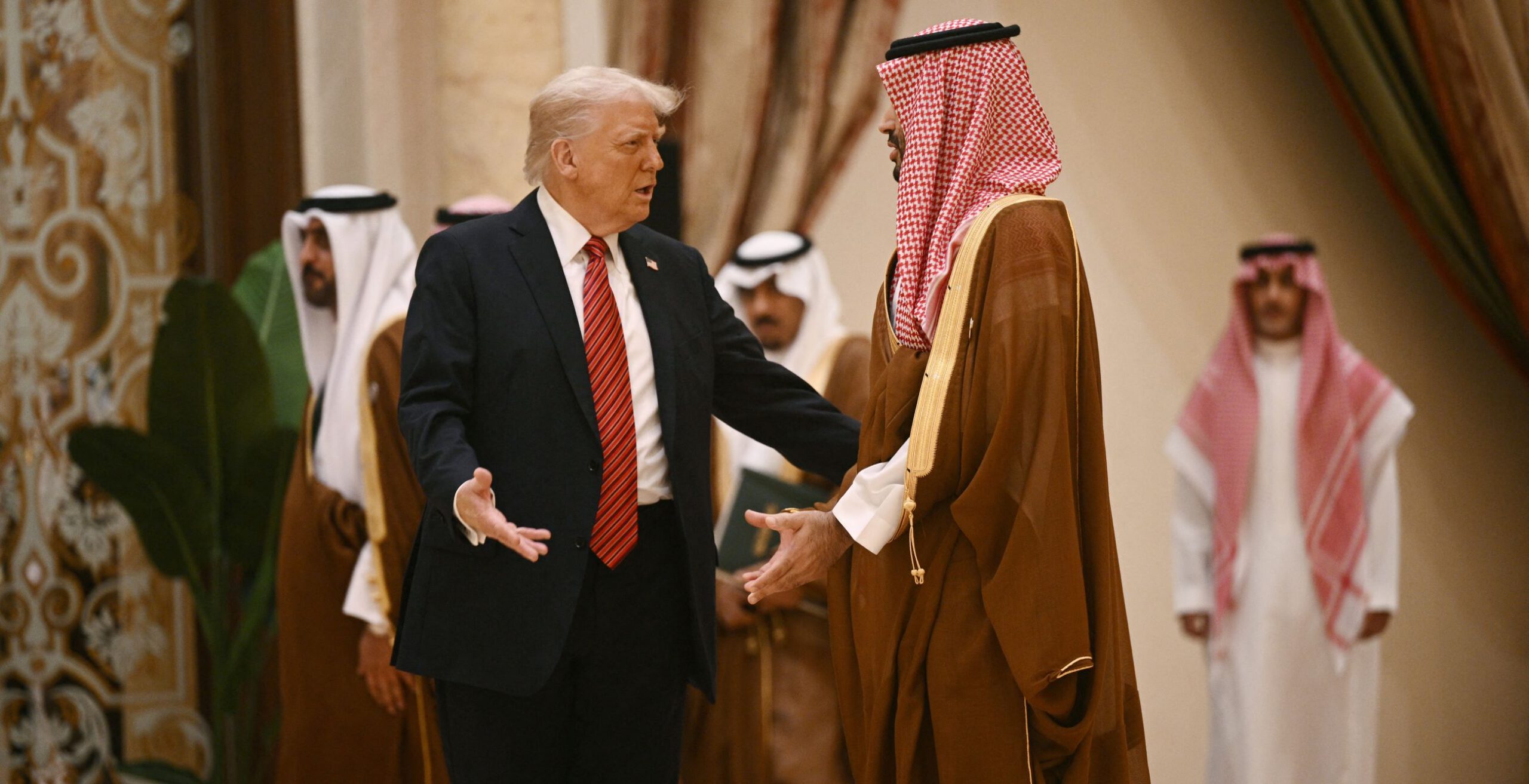
This week, US President Donald Trump makes his inaugural visit to the Middle East since the start of his second term, traveling to Saudi Arabia, Qatar, and the United Arab Emirates on May 13-16. Amid the heightened focus on US policy toward the Middle East, MEI’s experts take stock of Trump’s trip to the Gulf, how his administration has shaped its approach to the wider region in its first several months, and how regional actors are responding to the policies coming out of Washington.
The oldest peer-reviewed publication dedicated to the study of the modern Middle East, MEI’s flagship journal covers politics, society, and culture in the region.