Rima Majed is an Assistant Professor of Sociology at American University of Beirut (AUB). Her research focuses on social movements, sectarianism, conflict and violence, and gender and intersectionality in the Middle East. She holds a PhD and an MSc in Sociology from the University of Oxford. Dr. Majed was a visiting fellow at the Mamdouha Bobst Center for Peace and Justice at Princeton University in 2018/2019. Her work has appeared in many academic and media platforms including Social Forces; Mobilization; Middle East Law and Governance; Global Dialogue; Idafat: The Arab Journal of Sociology; Al Jumhuriya; CNN; Middle East Eyes, OpenDemocracy, and Al Jazeera English.
Unforgiven and unforgotten: Beirut’s port blast one year on
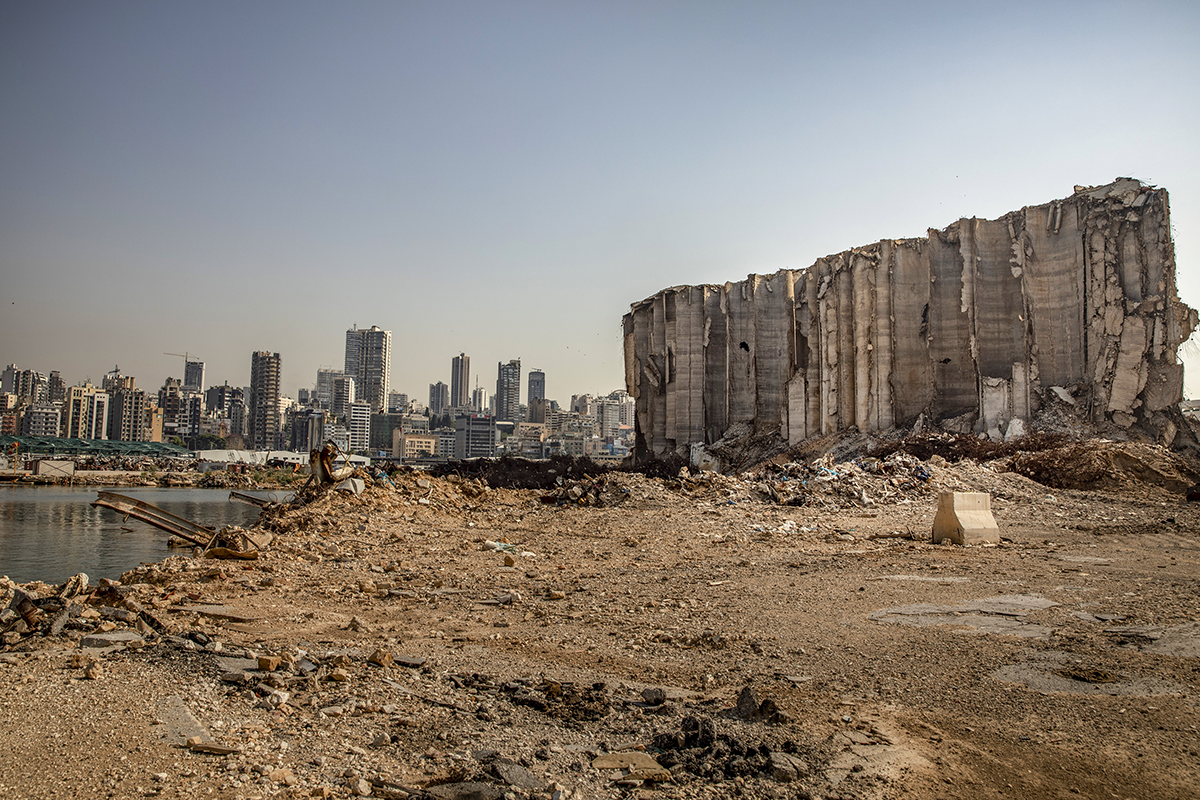
On August 4, 2020, images out of Beirut shocked the world. Hundreds of tons of ammonium nitrate exploded in the capital’s port, destroying most of the city and leaving behind 206 victims, thousands of injured, and hundreds of thousands of displaced. In this series, guest contributors join MEI’s resident and non-resident experts to reflect upon the political, legal, urban, and foreign policy implications of what may well be Lebanon’s crime of the century.
The Political (or Social) Economy of Sectarianism in Lebanon
Most of the literature that seeks to explain sectarianism in Lebanon focuses on its history or on the regional and geopolitical dynamics associated with it. Relatively few studies have examined the internal factors that shape the process of sectarianization and sustain sectarianism today. However, if one does not first understand the present dynamics of sectarianism and the material and structural factors that shape it, then exploring the history of the phenomenon in an attempt to locate its “roots” is unlikely to be very illuminating. This essay seeks to shed light on the current political economy of sectarianism in Lebanon so as to advance our understanding of this phenomenon.