Selçuk Colakoğlu is Prof. Dr. in the Department of International Relations at Yıldırım Beyazıt University (YBU) in Ankara and an advisor to the Center for Strategic Research (SAM) of the Ministry of Foreign Affairs of Turkey. His research interests include political and security issues in international relations, particularly in East Asia, Central Eurasia, and Turkish Foreign Policy. He has been a visiting professor in the Department of Turkish Studies at Hankuk University of Foreign Studies (HUFS) in Seoul, South Korea (1999-2001). He served as the chair of International relations (2008-2012) and the Director of Graduate School of Social Sciences (2011-2012) at Adnan Menderes University (ADU) in Nazilli, Aydın. Dr. Colakoglu’s Ph.D. dissertation dealt with the Northeast Asian security system. He has published two books and 30 articles and book chapters. His books are: Northeast Asia in International Relations (in Turkish, Ankara: USAK Press, 2009); Korean Society, Culture, Politics (in Turkish, Ankara: Orion Press, 2008). He earned his BA from Ankara University, his MA from from Middle East Technical University (METU) in Ankara, and his PhD in International Relations from Ankara University.
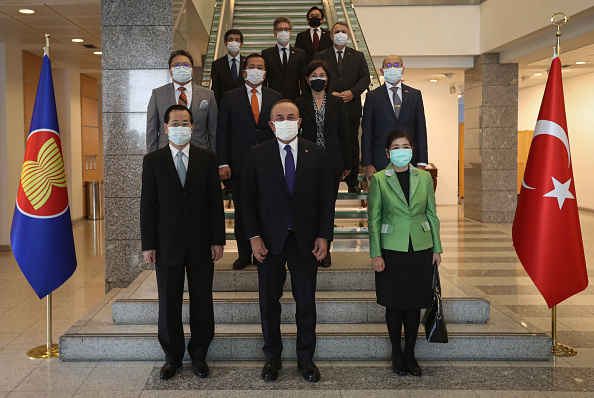
Turkey initiated a strategy to engage Southeast Asian nations in the early 2000s that resulted in the opening of new embassies and branches of numerous state-sponsored institutions across the region. With the launching of the Asia Anew Initiative in late 2019, Ankara has redoubled efforts to forge closer ties with the ten members of the Association of Southeast Asian Nations (ASEAN) and with ASEAN itself.
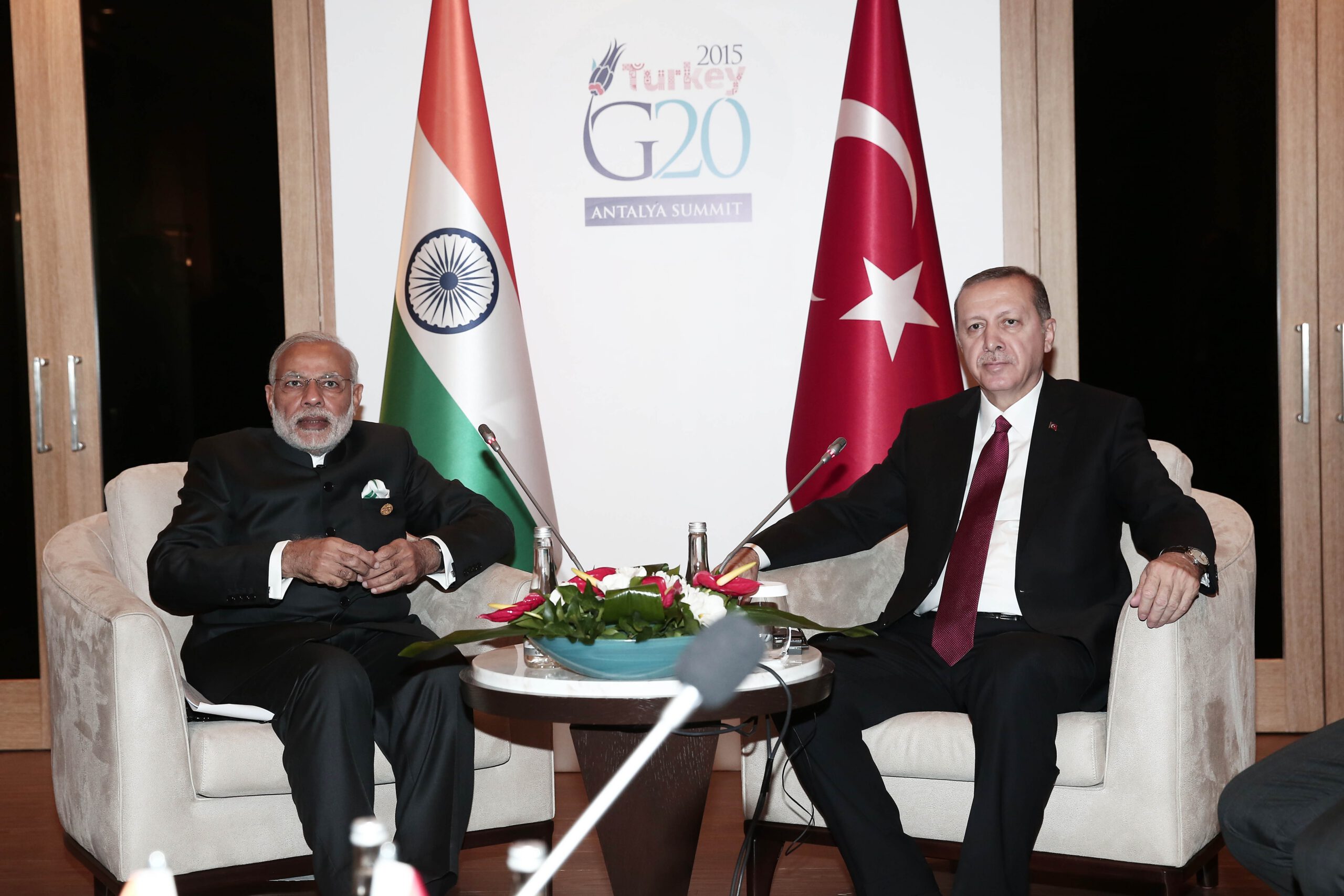
Both Turkey and India are middle-income secular democracies with deep historical connections, leading one senior Turkish lawmaker recently to refer to the two countries as “natural allies.” However, there has long been an impediment to developing more fruitful ties with India: Turkey’s pro-Pakistan orientation. The origins of this friction point date to the early 1950s, namely the inception of the Cold War and the early stages of the Indo-Pakistan conflict. This stumbling block has yet to be overcome. In fact, the “Pakistan factor,” specifically the Kashmir conflict, has lately resurfaced as a source of Turkey-India contention.
Turkey’s Asia Anew Initiative: Assessment and Shortcomings
On August 5, 2019 Turkey’s Foreign Ministry launched the Asia Anew initiative, whose declared aim is to give greater weight to cooperation with Asian countries in four substantive areas. This article shows that, although few details have emerged regarding how Ankara intends to implement this initiative, there is nonetheless sufficient reason to question whether it is viable or sustainable.
Turkey-Bangladesh Relations: A Growing Partnership between Two Friendly Nations
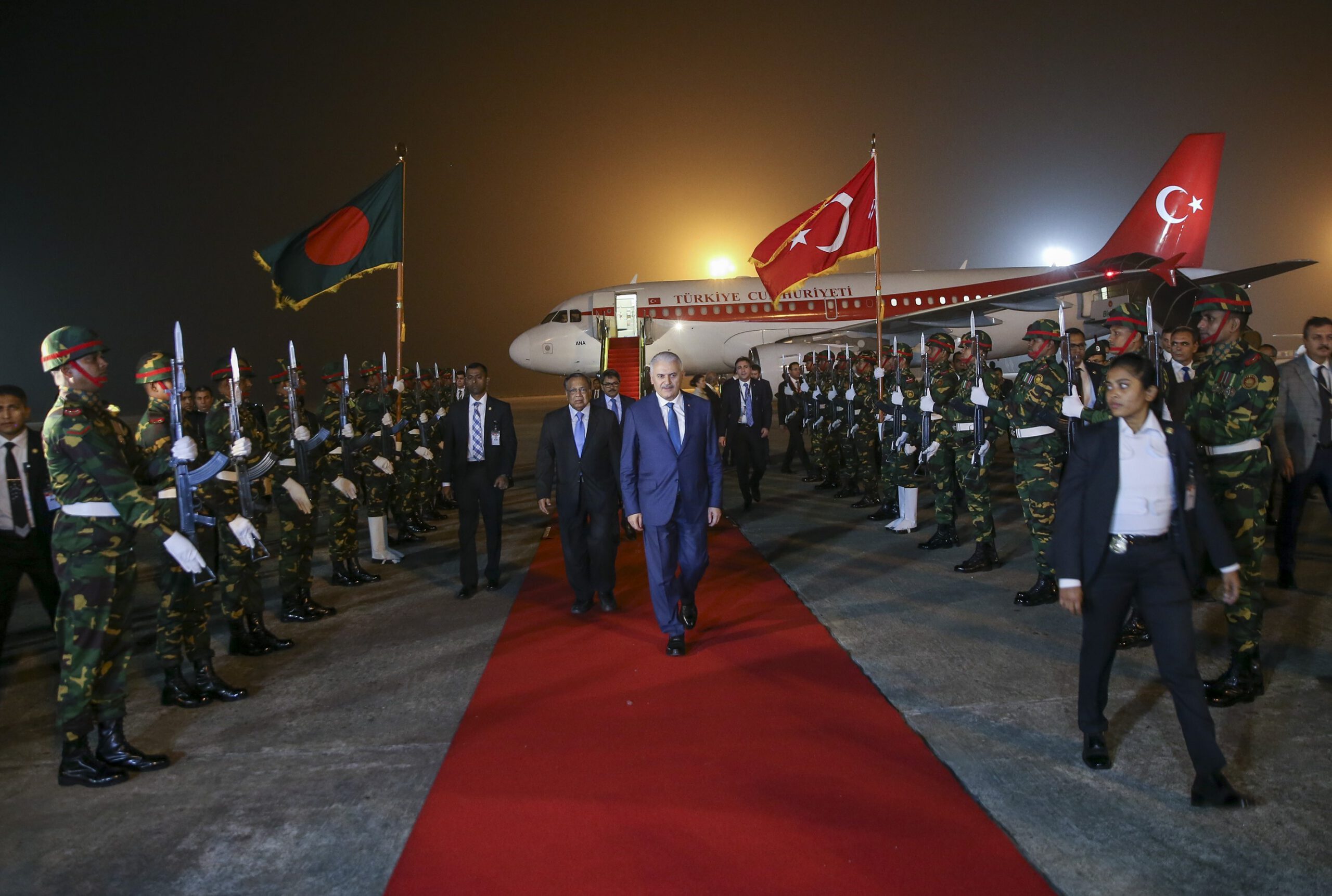
This article discusses the roots and early development, political setbacks, revitalization and untapped potential of the Turkey-Bangladesh bilateral relationship.
The Rise of Eurasianism in Turkish Foreign Policy: Can Turkey Change its pro-Western Orientation?
The Eurasianist (Ulusalcı in Turkish) ideology, which originated from the far-left movement in Turkey, espouses an anti-Western approach in foreign policy and ultranationalist sentiment in domestic politics. They contend that Turkey’s interests lie outside the Western world and that Turkey should join the Russia- and China-led “anti-imperialist” camp. This article examines the rise, shortcomings and failures of the Eurasianist approach in Turkish foreign policy.
China’s Belt and Road Initiative and Turkey’s Middle Corridor: A Question of Compatibility
Turkey’s “Middle Corridor” (MC) and China’s “Belt Road initiative” (BRI) are two grand schemes that envisage trans-continental integration. These two ambitious initiatives have been developed independently of one another. However, are they compatible?
Turkey-China Relations: From “Strategic Cooperation” to “Strategic Partnership”?
The blossoming of Turkey’s relations with China has occurred against the backdrop of Turkey’s apparent strategic estrangement from the West. But have Turkey and China succeeded in developing the full-blown “strategic partnership” envisaged in their 2010 joint communiqué? Relatedly, is Turkey on the verge of shedding its strategic links with the West in favor of consolidating them with China? This article aims to shed light on these two questions.
Turkey-Pakistan Security Relations since the 1950s
The initial impulse for Pakistan and Turkey to pursue security cooperation stemmed from their common opposition to Communism in the 1950s. Over the past decade, Pakistan and Turkey have once again sought to cooperate in the security sphere, this time in countering terrorism and ensuring stability in Afghanistan.