This individual is a guest contributor. MEI is not able to assist with contact requests.
Maria Golia, an American writer, has lived in downtown Cairo for over two decades. She is the author of Cairo, City of Sand and Photography and Egypt (Reaktion Books, UK, 2004, 2010), non-fiction works involving extensive historical research alongside an intimate understanding of the country’s present moment. Long-time columnist for the Lebanon Daily Star and the New Internationalist (Oxford), she contributes political and social commentary to a variety of publications. Her work aims to illustrate both the contrasts between Egyptian and other societies and the motivations that seem to drive us all.
Safeguarding and celebrating Egypt’s traditional crafts
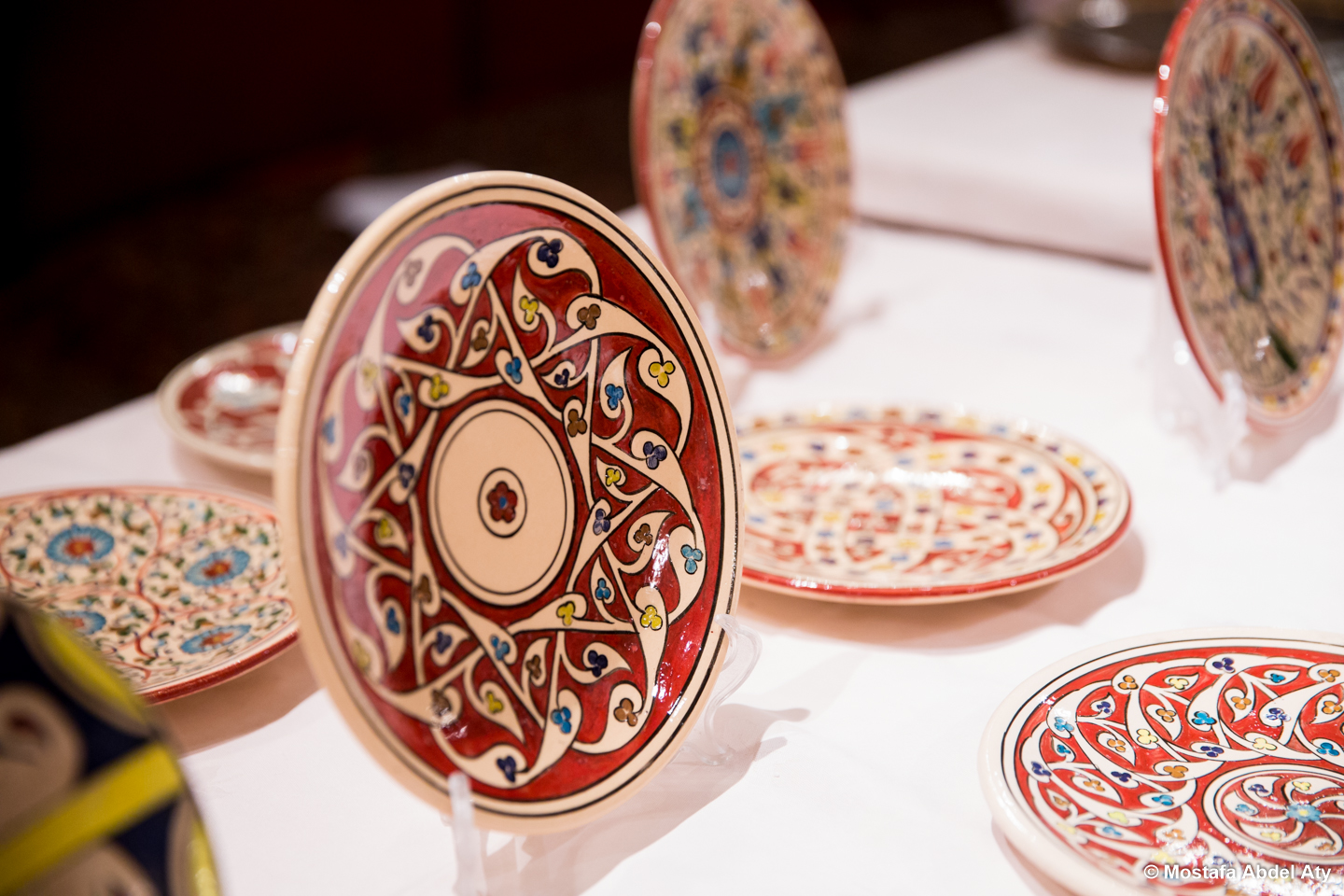
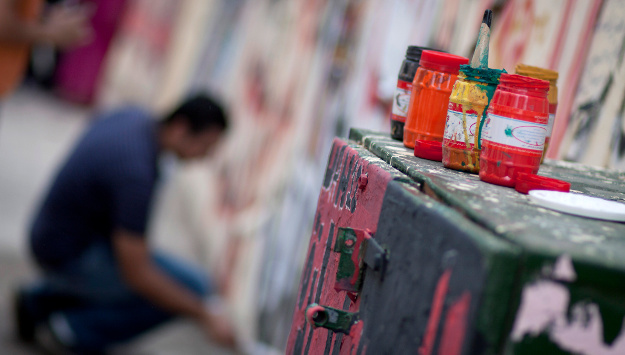
Accomplished craftspeople are a dying breed in Cairo, but Jameel House of Traditional Arts and Atelier Cairo are working to change that by training a new generation of artisans in traditional media like ceramics, wood, brass, glass, and gypsum work (stucco), helping to replenish the stock of skilled Egyptian craftspeople and keeping rare and beautiful art forms alive.
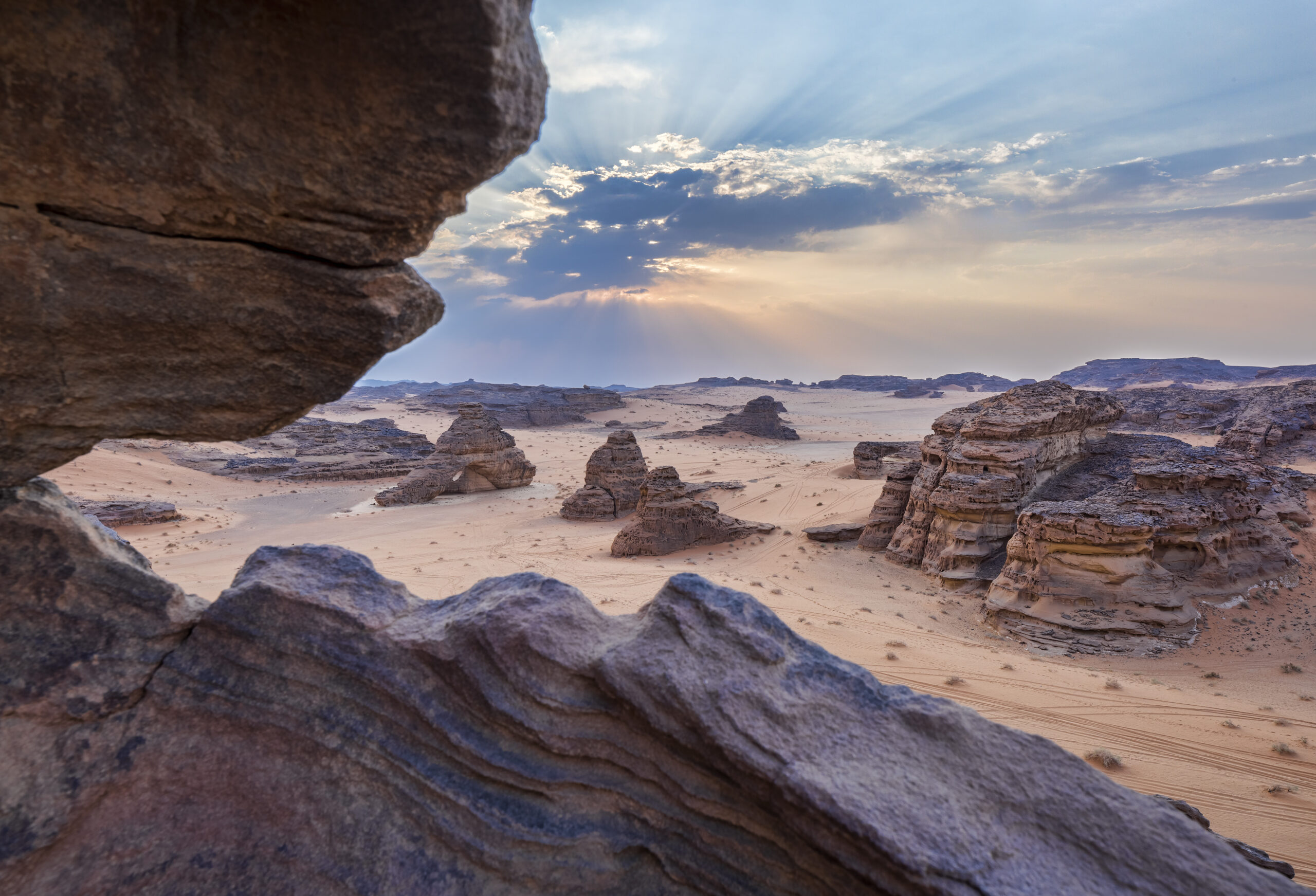
Saudi Arabia’s archeological treasures have long been hidden in plain sight, known mainly to the people living in their proximity and a handful of scholars. But five recent UNESCO World Heritage Site designations have highlighted the universal value of the country’s material legacy.
Egypt’s modern leaders may lack the means of their forebears when it comes to raising awe-inspiring monuments, but they still find impressive ways to promote the image of a confident nation. Widely touted “mega-projects,” like the Biblioteca Alexandrina, the “new” Suez Canal, and “New Cairo,” a skyscraper-studded capital city slated to replace the embattled 1400-year-old one, all come adorned with hyperbolic attributes and historic implications for all mankind.
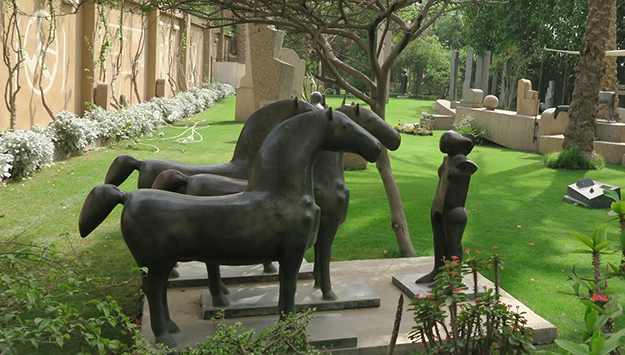
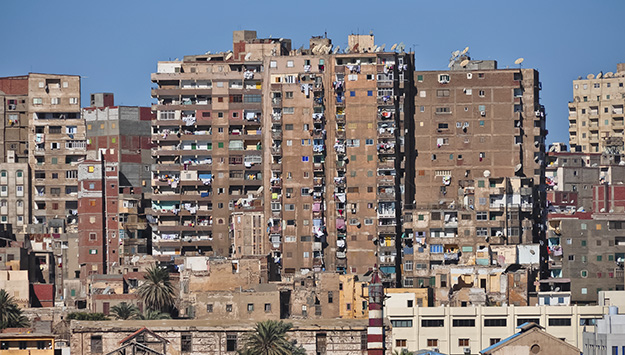
The road to Haraniyya, a formerly rural area just beyond the Giza pyramids, is now an eight-lane highway flanked by red-brick buildings packed and stacked as if designed by some demented cubist. But take the exit, cross a canal and tucked behind a wall of residential towers, the Museum of Adam Henein exists in magical contrast, a verdant stronghold of living art, and one of Cairo’s hidden treasures.
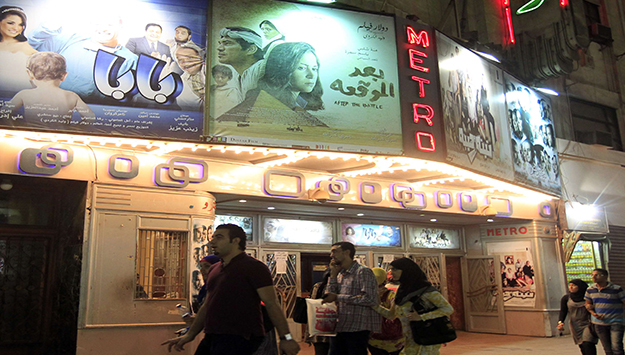
The cinema has long been a contested space in Egypt. Following its nationalization in 1966, a formerly flourishing film industry ran steadily downhill and movie theater operators were subjected to censors’ increasingly puerile whims. The only independent company allowed to operate was Misr International Films—founded in 1972 by Egyptian director Youssef Chahine (1926-2008)—to produce, distribute, and exhibit films while coincidentally enabling the state to posit itself as an indulgent patron of cinematic art. The annual state-run Cairo International Film Festival (CIFF, est.
Since the 1990s, the need for streamlined procedures to facilitate business, trade and investment has grown to crisis proportions in Egypt. But the political will to deliver administrative reform was always lacking, not least because it would involve lay-offs and wage reductions; in other words, direct threats to the livelihoods of some seven million state employees and consequently the regime’s popularity. But with the government wage bill estimated to reach USD30 billion next year, Egypt has finally taken action.
In mid-June, just before Ramadan, the pre-dawn calm of downtown Cairo was shattered by the sound of heavy machinery. The municipality had decided to repair the battered sidewalks, a fairly regular occurrence since shoddy concrete tiles are typically used for the job. Truckloads of sand were deposited at intervals along the main boulevards to be spread as a bed for the new tiles, while much of the rubble from the old ones was left piled by the curbs. To avoid the rough new terrain pedestrians took to the streets with the cars.
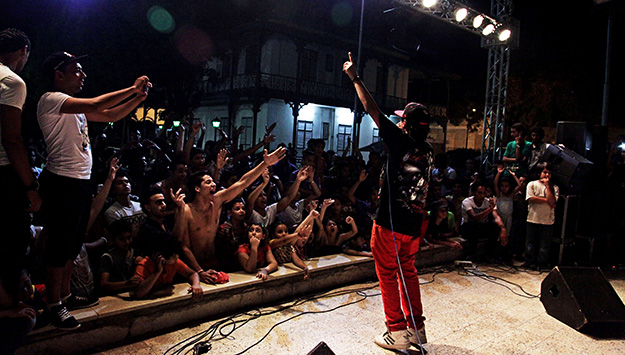
For Egypt’s low-income majority, weddings are the prime source of group entertainment, celebrated like block parties in cramped streets decorated with arabesque tapestries and drenched in colored lights and sound. You won’t hear romantic crooning at these gatherings; in Cairo’s densely-inhabited popular quarters, wedding parties are more akin to raves. The music is raw synthetic beat embroidered with syncopated tabla (Egyptian drum) samples and queasy electronic loops.
Cairo's Rough, Crowded, and Vital Underground Artery
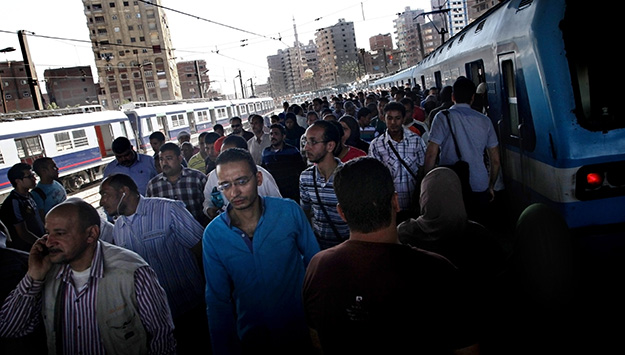
Inaugurated in 1987, Cairo’s Metro was Africa’s first inner-city underground and the embodiment of Hosni Mubarak’s promise to modernize Egypt’s infrastructure. It is hard to think of a Mubarak-era project that was better planned, more efficiently executed, or has had such a functional impact on so many people’s lives. Serving four million passengers daily, the Metro is the fastest, cheapest means of navigating the traffic-congested urban behemoth.
Cairo’s Townhouse Gallery: Social Transformation through Art
As the urban historian Lewis Mumford pointed out, “When a city has reached the megapolitan stage, it is plainly on the downward path: it needs a terrific exertion of social force to overcome the inertia, to alter the direction of the movement, to resist the immanent processes of disintegration.”[1]
In March 2014, before resigning as Egypt’s minister of defense and pursuing his campaign for the presidency, General Abdul-Fattah el-Sisi announced an agreement with the UAE construction firm Arabtec to build a million affordable homes for “Egyptian youth.” The Egyptian Army facilitated the deal by pledging to donate 160 million square meters of land in 18 locations nationwide. Although Arabtec had never handled a project of this scale or value ($40 billion), one of its largest stakeholders (22 percent) is the Abu Dhabi state fund Aabar.
The New Suez Canal Project and Egypt’s Economic Future
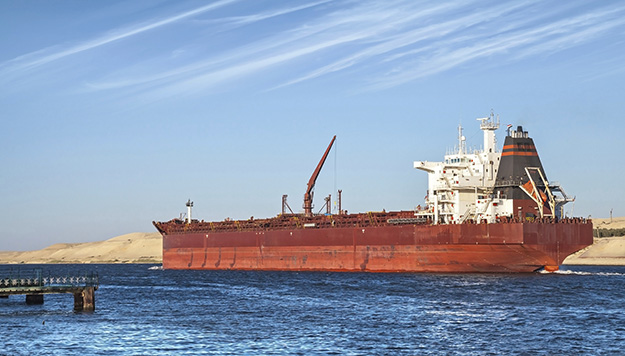
During a televised speech on August 5, 2014, President Abdul-Fattah el-Sisi announced a “surprise” he’d planned for the Egyptian people: the launch of the New Suez Canal mega-project, involving an expansion of the existing canal and the development of its environs into a global trade hub. The project is making waves in Egypt and worldwide, mobilizing equipment, contracts, and finance. But the plan to widen and deepen the existing canal to permit passage to the world’s largest container ships and to dig a parallel waterway to allow for two-way traffic was not new.
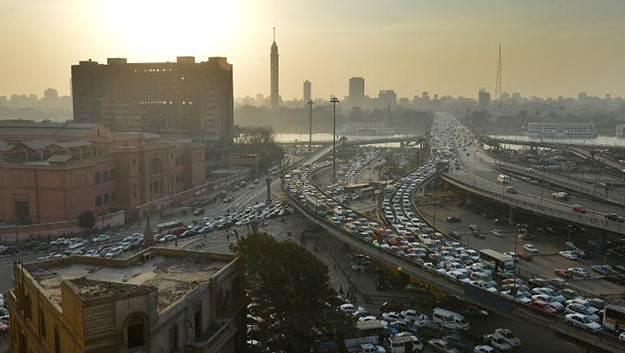
Cairo’s Ring Road, a peripheral highway linking the city’s core to surrounding districts, is an eight-lane free-for-all, with cars, buses, and overloaded trucks weaving randomly at high speeds. “I for one consider it to be an off-road, not a highway,” says Mahmoud Mostafa Kamal, editor of the online Arabic-language automotive magazine, el-Tawkeel (The Dealership).
Alexandria, like Cairo, is a mismanaged city with little to offer by way of basic services, much less cultural activities. But unlike Egypt’s insular, desert capital, it is a Mediterranean city, cooler, less polluted or crowded than Cairo (with just six million inhabitants), no longer a cosmopolitan hub but open to the world in material and other ways. There are signs here of a trend toward “social transformation”—a focus on the immediate surroundings, the city itself, to explore and expand its possibilities.
The Science of Preserving Egypt’s Cultural Heritage
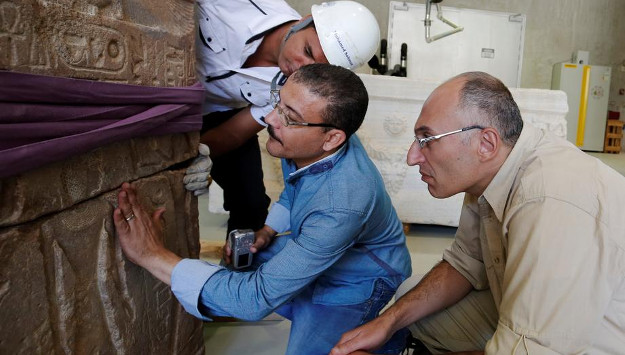
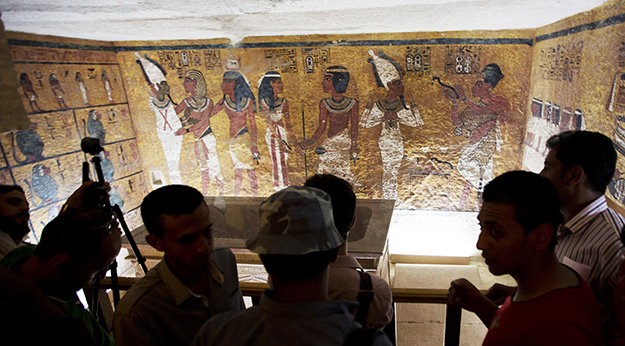
Around the world, priceless monuments and artifacts are disintegrating due to exposure to pollution and hordes of visitors coupled with the sheer weight of age. The inexorable loss of cultural heritage concerns us all, but is especially troubling for decision-makers in places like Egypt that rely on cultural tourism-generated income to stay afloat. How to reconcile the need to make decaying treasures available to the public with the fact that public display is ruining them?