This individual is a guest contributor. MEI is not able to assist with contact requests.
Saeid Golkar is a senior fellow at the Tony Blair Institute for Global Change. He is also an assistant professor in the Department of Political Science and Public Service at the University of Tennessee at Chattanooga. Golkar received his PhD in political science from Tehran University in 2008 before moving to the U.S. in 2010. He has taught and conducted research at Stanford University and Northwestern University. His research focuses on international and comparative politics of authoritarian regimes, with an emphasis on the Middle East and North Africa. Golkar is an authority on the Basij militia and the IRGC, and his first book, Captive Society: The Basij Militia and Social Control in Post-revolutionary Iran (Columbia University Press, 2015), was awarded the Washington Institute’s silver medal prize.
From Nasrallah to Khamenei: The power vacuum shaping the Middle East
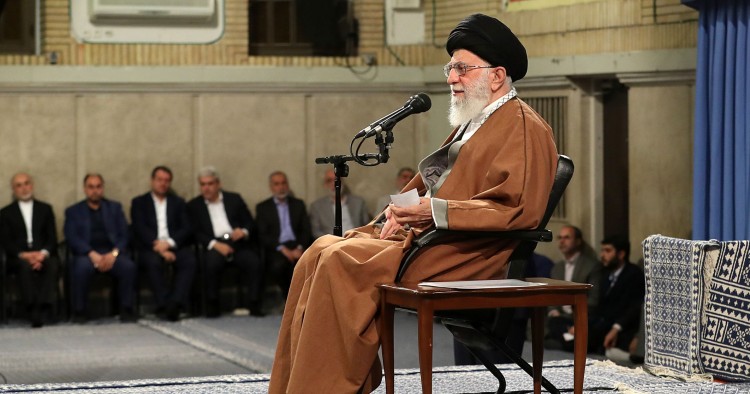
Israel’s targeted killing of Hezbollah Secretary-General Hassan Nasrallah has not only caused a succession crisis for Hezbollah, but has also highlighted the problem of succession for the Islamic Republic of Iran. Coupled with the death of President Ebrahim Raisi in a helicopter crash earlier this year, Nasrallah’s assassination has scrambled the dynamics of the supreme leadership transition with an aging 85-year-old Ayatollah Ali Khamenei at the helm, and is likely the reason his son, Mojtaba Khamenei, a key figure in the Office of the Supreme Leader, has recently emerged from the shadows.
The recent removal of IRGC commander Ali Shamkhani from his role as the head of the Islamic Republic of Iran’s top foreign and security policy body, the Supreme National Security Council (SNSC), has triggered assessments about the potential implications for Tehran’s external calculus. But the changes at the SNSC should not be viewed in isolation. Rather, they must be understood and assessed in the context of a much deeper transformational project that began in 2019, personally spearheaded by Supreme Leader Ayatollah Ali Khamenei.
Why Khamenei is unlikely to pick his son to succeed him as Iran’s supreme leader
Amid the ongoing circus over efforts to revive the 2015 Iran nuclear deal, two rumors have started to gain traction inside and outside Iran: Supreme Leader Ayatollah Ali Khamenei is on his deathbed and preparations are being made for his son, Mojtaba, to succeed him.
Iran’s Revolutionary Guard and the Rising Cult of Mahdism: Missiles and Militias for the Apocalypse
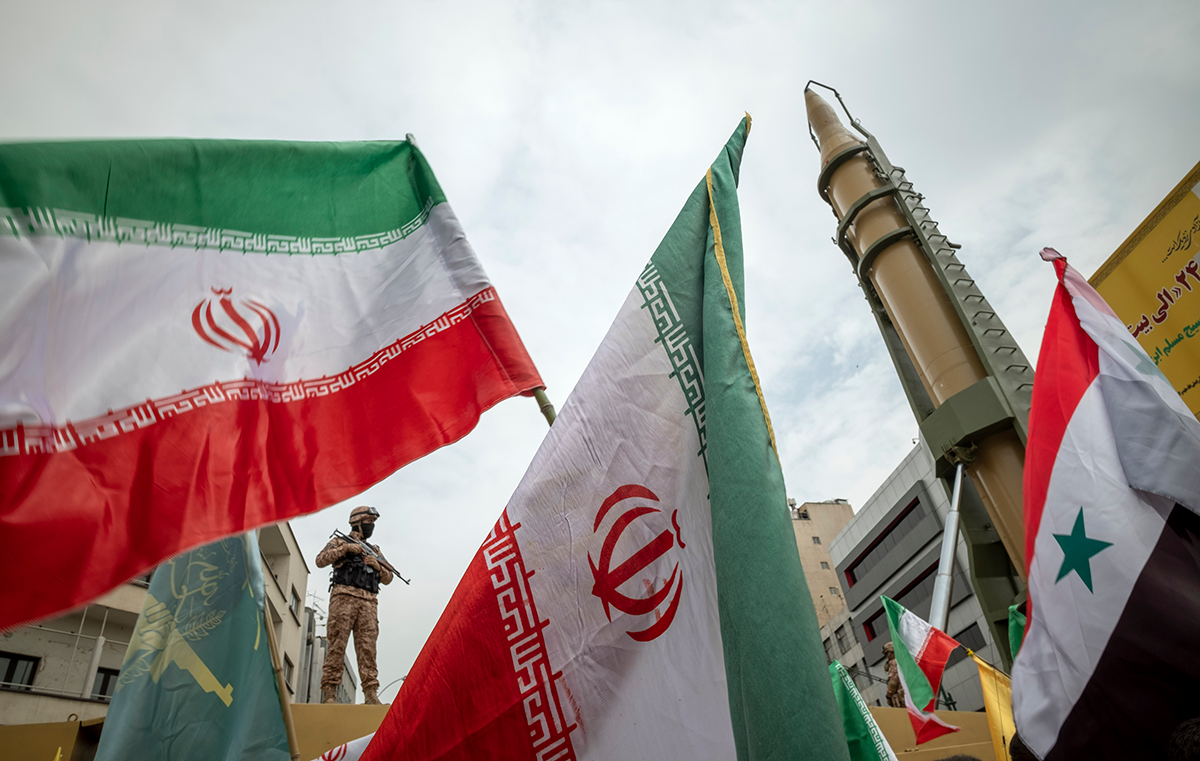
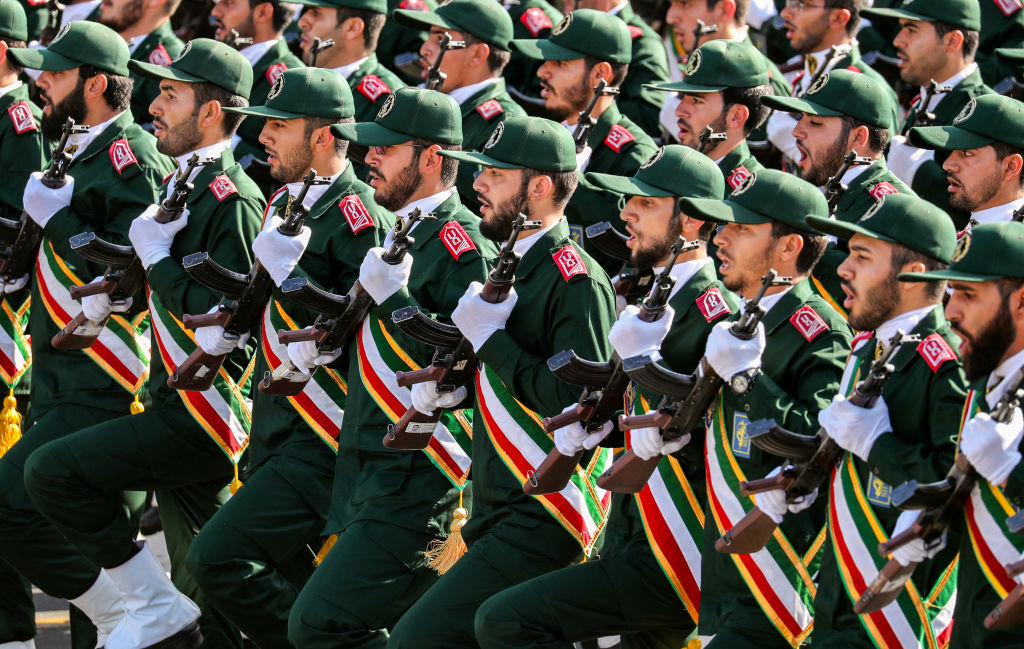
As the U.S. administration considers whether to remove Iran’s Islamic Revolutionary Guard Corps as a foreign terrorist organization, understanding its nature, development, and ideology is essential to making an informed decision. There is much about it that differentiates it from a conventional armed force. One fundamental aspect of its ideology that until now has been overlooked is the doctrine of Mahdism.
Dictators and civilizational thinking in Iran: From the Great Civilization to Islamic Civilization
Despite critical differences between the two political regimes that have dominated Iran for nearly a century, there are striking similarities between the Pahlavi monarchy (1925-1979) and the Islamic Republic (1979-present). Like Mohammad Reza Shah, Ayatollah Ali Khamenei has built a cult of personality around himself and has engaged in “civilizational thinking” — a preoccupation with defining the eternal essence and world-historical destiny of Iran through references to a glorious (one might say “glorified”) collective past. Nonetheless, the two leaders have interpreted Iranian history in vastly differing ways that serve divergent ideological ends.
Will COVID-19 inhibit Iran’s ability to suppress protests?
Since 2017, Iran has seen several waves of protests rooted in political, social, and, most importantly, economic grievances. In light of COVID and the post-pandemic fallout, there is every indication that unrest will continue to grow, and even accelerate. Until now, the regime’s coercive apparatus has had both the capacity and the willingness of its members to successfully suppress anti-regime unrest. But has COVID-19 changed this balance? What impact, if any, has the pandemic had on the regime’s security capacity?