This individual is a guest contributor. MEI is not able to assist with contact requests.
Amb. (ret.) Wendy Chamberlin served as president of the Middle East Institute from 2007 to 2018. Previously, as deputy high commissioner for refugees from 2004 to 2007, she supervised the administration of the U.N. humanitarian organization. A 29-year veteran of the U.S. Foreign Service, she was ambassador to Pakistan from 2001 to 2002, when she played a key role in securing Pakistan’s cooperation in the U.S.-led campaign against al-Qaeda in Afghanistan in the wake of the terrorist attacks against the U.S. on September 11.
Amb. Chamberlin served as director of global affairs and counter-terrorism at the National Security Council (1991-1993) and as deputy in the bureau of international counter-narcotics and law enforcement affairs (1999-2001). As assistant administrator in the Asia-Near East bureau of the U.S. Agency for International Development from 2002 to 2004, she oversaw civilian reconstruction programs in Iraq and Afghanistan and development assistance programs throughout the Middle East and East Asia. Other assignments included U.S. ambassador to the Lao People’s Democratic Republic (1996-1999), director of press and public affairs for the Near East Bureau (1991-1993), deputy chief of mission in Kuala Lumpur (1993-1996), Arab-Israeli affairs (1982-1984) and postings in Morocco, Pakistan, Malaysia, Laos, and Zaire.
Amb. Chamberlin serves on the boards of the Hollings Center and the Global Hope Coalition. Her opinion pieces have been published in the Washington Post, International Herald Tribune, and Philadelphia Inquirer, among others. She has commented on Pakistan and the Middle East in interviews with The News Hour with Jim Lehrer, ABC, CBS, NBC, BBC, FOX, NPR and al-Jazeera.
Recognizing Jerusalem as Israel's Capital Carries Enormous Risk
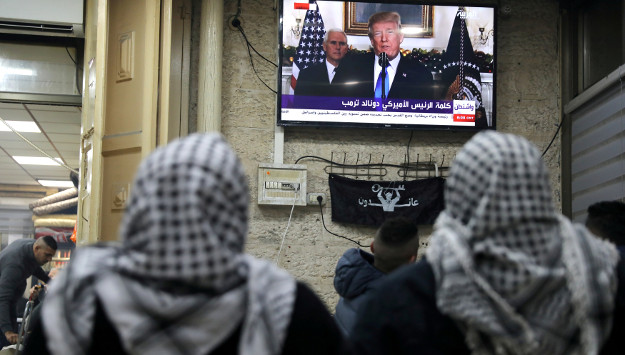
President Donald Trump’s decision to recognize Jerusalem as the capital of Israel is a major policy shift that carries enormous risk. Warnings from Arab and European allies of the “explosive” consequences of the move aptly reflect the fragile dynamics in the region and the sensitivity of the question of Jerusalem to millions worldwide.
On the heels of the 16th anniversary of 9/11 — after two costly wars, countless sacrifices by our men and women in uniform, and a whopping $4 trillion-plus price tag — it’s time to ask: What’s missing in our grand strategy?
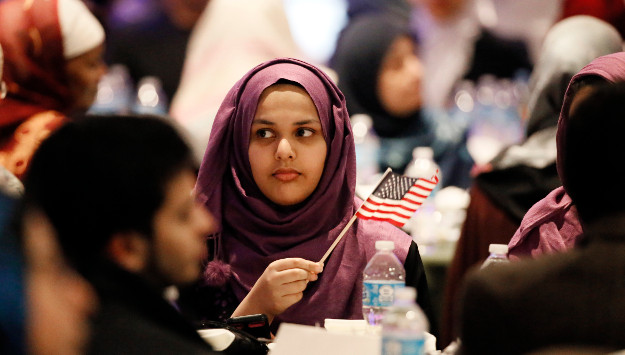
America has long served as a powerful role model for the world, based largely on its commitment to its core principles of freedom, equality, and respect for diversity of opinion and religion. The recent call by Donald Trump to ban all Muslims from entering the United States is an affront to these values, and a threat to America’s domestic tranquility and its standing in the world. In an age where words travel instantaneously across the globe, hate speech can have the same force as actions and policies in shaping opinions abroad. It cannot be ignored.
Culture Under Threat: Fighting Terrorist Financing in the Middle East
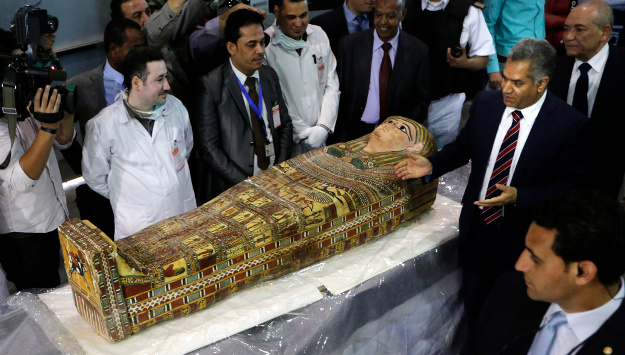
This article was first published on Huffington Post. The Antiquities Coalition and MEI are co-sponsoring a regional conference in Cairo on May 13-14 to reach an agreement on steps to combat antiquities looting.
The members of the Friends of Yemen, comprising over 30 governments and several international institutions, including the United Nations, World Bank, Arab League, and European Union, gathered for their sixth meeting September 25 in New York on the margins of the UN General Assembly. Chaired by the governments of Yemen, Saudi Arabia, and the United Kingdom, participants praised Yemen’s efforts to implement a political transition through inclusive and comprehensive dialogue and negotiation—a stark contrast to the course of events in better-known Syria and Egypt.
Gulf Governments Offer Financing for U.S. Strike on Syria
Like pieces fitting together in a jigsaw puzzle, Arab governments – presumably from the oil-rich Gulf Cooperation Council – offered to finance a U.S. military strike on Syria, according to comments made by Secretary of State John Kerry during testimony September 4 with the House Foreign Affairs Committee. In an exchange with Representative Ileana Ros-Lehtinen (R-FL) on the potential cost of U.S. military action in Syria, Kerry said,
Over the past two days, millions of Egyptians have taken to the streets, most of them calling for early presidential elections with the aim of ousting Mohamed Morsi. June 30 marked Morsi’s one-year anniversary as president, and while he was elected democratically in 2012, his actions since have been more in the authoritarian style of a Mubarak than a reformer with the demands of the Egyptian street in mind.
Introduction to Iraq's Refugees and IDP Crisis: Human Toll and Implications
Originally posted July 2008
In the comparatively short time since the establishment of the Iraqi state in 1920, the country has experienced successive waves of forced migration. Yet the magnitude of the forced displacement of Iraqis from their homes since 2003 is unprecedented. In addition to the still dire humanitarian situation are the potentially far-reaching negative implications of the refugee/IDP crisis for the future of Iraq and the Middle East as a whole.
After Benghazi: Diplomacy With a State; War Within
This article was first published by The Huffington Post on October 2, 2012
Assertions and opinions in this publication are solely those of the above-mentioned author(s) and do not necessarily reflect the views of the Middle East Institute, which expressly does not take positions on Middle East policy.
This article first appeared as an Op-Ed on Politico.com on September 19, 2011
Palestinian President Mahmoud Abbas early this week will likely fulfill his longstanding vow to introduce in the U.N. Security Council a resolution to recognize Palestine as the 194th member state. No one should be the least bit surprised.
This piece first appeared as a Commentary on McClatchyDC.com, August 24, 2010
It is hard to imagine a government that faces more existential threats to its people, state, and democracy than the current civilian government in Pakistan.
This Commentary first appeared as an op-ed on Foreign Policy's AfPak Channel, August 18, 2010.
The desperate plight of over 20 million Pakistani citizens displaced and dispossessed by the most ferocious flooding in the history of the young state is heartbreaking. Nature is extracting a cruel price on a population already racked by debilitating poverty and a brutal insurgency.
This Op/Ed was published first on February 3, 2010 by McClatchy Tribune.
The bipartisan Kerry Lugar Bill provides a multi-year, super-sized economic aid program to the people of Pakistan. This is the right approach to improved US-Pakistan relations. The majority of Pakistanis distrust the US because they believe we favor military dictators over civilian democrats and are quick to abandon promised economic aid programs once we have achieved our security goals.