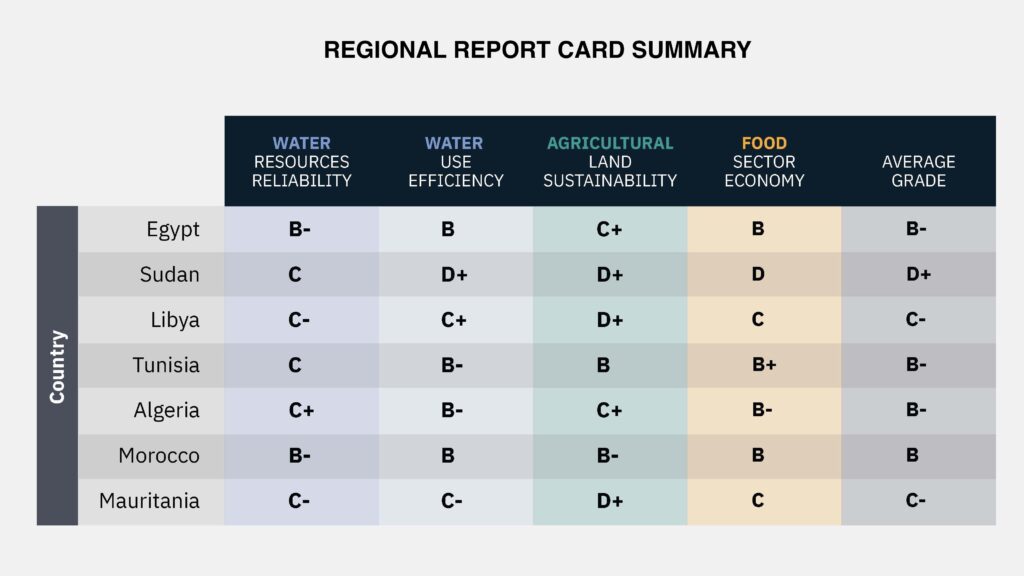
This report assesses the future sustainability of agriculture across North Africa using a multidimensional approach that considers the dynamics of water, climate, land, and economics. To enable this assessment of sustainable agriculture across the region, the author evaluates water resources reliability, water use efficiency, agricultural land sustainability, and the food sector economy for Egypt, Sudan, Libya, Tunisia, Algeria, Morocco, and Mauritania, and provides recommendations for action.
North Africa faces mounting pressures on agricultural sustainability due to water scarcity, climate variability, land degradation, and economic vulnerabilities in food systems. Using a comparative report card approach, this study evaluates the current state and future trajectory of four key metrics: water resources reliability, water use efficiency, agricultural land sustainability, and the food sector economy, in seven North African countries: Egypt, Sudan, Libya, Tunisia, Algeria, Morocco, and Mauritania.
The resulting analysis reveals significant differences across the region. Countries such as Morocco, Tunisia, and Egypt demonstrate relatively stronger institutional capacity and investment in water and agricultural modernization. Others, particularly Sudan and Mauritania, face deeper structural challenges related to conflict, limited infrastructure, and resource degradation.
While several countries are implementing policies to improve water efficiency, expand their sources of irrigation, and promote climate-smart agriculture, the region remains highly vulnerable to climate change and resource constraints. Sustained investments in water management, agricultural innovation, and regional cooperation will be critical for improving long-term food security and agricultural resilience.
Egypt
Egypt is advancing initiatives to optimize water use, promote climate-smart agriculture, and strengthen its food systems, yet long-term gains will rely on sustained investment and integrated climate planning.
Average Grade: B-
Sudan
Facing overlapping crises of water scarcity, land degradation, and conflict, Sudan’s food security is deteriorating rapidly, with recovery contingent on peace, rebuilding, and targeted investments.
Average Grade: D+
Libya
Efforts to improve water management, land resilience, and food security in Libya are underway, but the country’s progress remains vulnerable to political instability and the need for climate-adaptive investment.
Average Grade: C-
Tunisia
Tunisia is actively addressing water shortages, enhancing agricultural sustainability, and reinforcing food systems, though persistent droughts and resource constraints require continued adaptive management and funding.
Average Grade: B-
Algeria
Initiatives to strengthen water reliability, boost agricultural efficiency, and expand food production in Algeria are in progress, but resilience depends on better resource governance, sustained investment, and climate adaptation.
Average Grade: B-
Morocco
Through integrated water, land, and food security strategies, Morocco is positioning itself to better handle climate pressures and future agricultural demands, while continued investment and modernization remain essential.
Average Grade: B
Mauritania
Combining water management improvements, sustainable agriculture, and land restoration, Mauritania is working toward long-term resilience, yet success will hinge on boosting water efficiency, sustaining investment, and reducing reliance on food imports.
Average Grade: C-
Recommendations
North Africa’s long-term agricultural viability hinges on five interlocking priorities centered around technological innovation, resource management, and effective governance:
Raise agricultural water-use efficiency through modern irrigation technologies, stronger infrastructure management, and improved water accounting to cut losses without sacrificing productivity.
Diversify water supply via desalination, wastewater reuse, and other nonconventional sources, paired with stronger governance frameworks for sustainable cross-sector allocation.
Protect farmland and soil health through robust land-use planning and sustainable land management to curb soil degradation and the conversion of fertile land to urban development.
Build food-system resilience by reducing exposure to global market shocks — diversifying import sources, expanding grain storage, and strengthening domestic value chains.
Strengthen institutions and governance, the decisive factor underpinning all the above, since water management, land protection, and modernization each depend on cross-sector coordination.
Introduction
Assessing the future sustainability of agriculture across North Africa requires a multidimensional approach that considers the dynamics of water, climate, land, and economics. Though Egypt, Sudan, Libya, Tunisia, Algeria, Morocco, and Mauritania share some regional challenges regarding their agricultural sustainability, there are several important differences when it comes to their respective natural resources, institutional capacity, and policy approaches.
To enable this assessment of sustainable agriculture across the region, four key metrics were identified and evaluated:
Water Resources Reliability considers the availability and long-term sustainability of both freshwater and nonconventional water sources.
Water Use Efficiency focuses on irrigation practices and the extent of water losses and mismanagement experienced in agricultural areas.
Agricultural Land Sustainability examines farmland viability constraints such as desertification, urban expansion, soil degradation, and contamination.
The Food Sector Economy assesses the overall economic health of the agricultural sector by considering factors such as the trade dynamics of food exports and imports, sector employment, and contribution to the national GDP.
Together, these four metrics provide a framework for understanding and comparing the sustainability of agriculture across North African countries. In addition, institutional and governance capacity is also considered throughout the assessment. Policy coordination, regulatory frameworks, and the ability of public institutions to implement reforms play an important role in shaping the effectiveness of water management, agricultural policy, and the resilience of national food systems.
Methodology
Grades for the four metrics for each country are assigned using a qualitative assessment informed by current conditions, recent trends, and the expected trajectory of these metrics. Grades are assigned on a scale ranging from A to D, with plus and minus distinctions reflecting relative performance within each range and the relative severity of risks within each category. For example, a B+ indicates stronger performance within the B range, while a B- indicates greater vulnerabilities:
A range: Strong performance with resilient systems and highly positive long-term outlook.
B range: Moderate performance with functioning systems but notable structural risks.
C range: Significant vulnerabilities or constraints that threaten long-term sustainability.
D range: Severe systemic weaknesses, instability, or breakdown of performance.
The grading approach considers both current conditions and recent trajectories as indicators of future outlook. Countries demonstrating improvements through policy reforms, investments, or technological adoption may receive stronger grades even if structural challenges remain. Conversely, countries experiencing deteriorating conditions, conflict, or declining resource availability may receive lower grades reflecting future sustainability risks.
The analysis draws on publicly available data from international organizations, government reports, and academic research. However, data availability varied significantly across countries, particularly in fragile or conflict-affected nations. In some cases, data limitations required reliance on broader regional studies or proxy indicators. The assessment focuses primarily on developments and trends observed between 2019 and 2025, while incorporating longer-term structural conditions where relevant. Because of these constraints, the grades should be interpreted as comparative indicators rather than precise quantitative rankings. The purpose of the report card framework is to provide a policy-oriented snapshot of agricultural sustainability challenges and opportunities across the region.
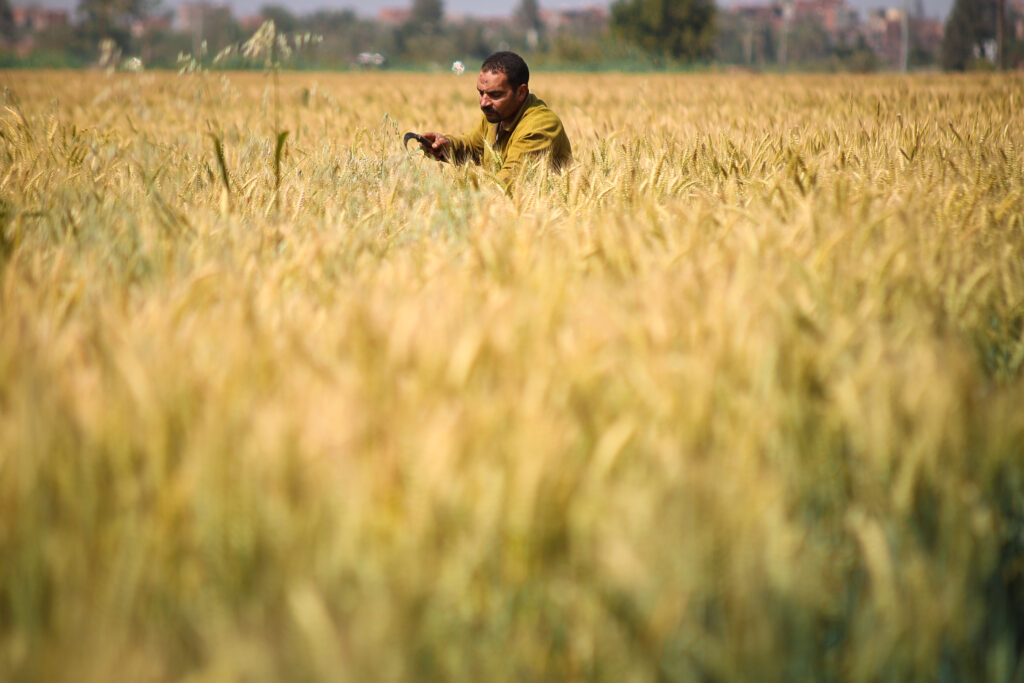
Photo above: A farmer plows his land during the Sham El Nessim celebrations in the village of Dondit, Dakahlia Governorate, northern Egypt, on April 13, 2026. Source: Ahmed Mosaad/NurPhoto via Getty Images.
Egypt
Water Resources Reliability: B-
Egypt remains overwhelmingly dependent on the Nile River, which supplies approximately 95% of the nation’s water needs.[1] The filling and completion of the Grand Ethiopian Renaissance Dam (GERD) by upstream Ethiopia have further intensified concerns about potential reductions in Nile water flow to Egypt, particularly during prolonged periods of drought.[2] These geopolitical tensions are compounded by the effects of climate change, which is affecting rainfall patterns and increasing evaporation across the basin.[3] In response, the government is investing in large-scale desalination plants to reduce reliance on Nile freshwater, aiming to increase desalination capacity from 1.3 million cubic meters per day to 8.85 million cubic meters per day by 2050.[4] Egypt is also expanding the reuse of treated wastewater as an additional nonconventional water supply to help meet growing agricultural and industrial demand.[5] The country’s relatively strong institutional framework for water governance has enabled it to pursue these large-scale infrastructure investments, along with long-term planning strategies, to manage water scarcity. Egypt’s 2030 Vision development agenda prioritizes safeguarding water resources by strengthening the institutions that manage them, improving water infrastructure, and promoting more efficient consumption. In line with this, the Ministry of Water Resources and Irrigation launched a long-term strategy (2017-37) to confront growing water scarcity and meet water security targets by 2050. The plan highlights Egypt’s widening water gap — the country requires 114 billion cubic meters (bcm) annually, according to figures from 2019, but receives only about 60 bcm — and stresses the need for large-scale, sustained investments in the water sector.[6]
Water Use Efficiency: B
Although agricultural water use efficiency in Egypt is relatively high (81%), there is still room for improving irrigation efficiency on Egyptian farms.[7] Several government-led modernization initiatives have been aimed at addressing water scarcity and rising water demand. Central to these efforts is the Irrigation Modernization Project, often referred to as Irrigation 2.0,[8] which supports the adoption of more efficient irrigation technologies, such as drip and sprinkler systems, improved water drainage infrastructure, and the expansion of treated wastewater reuse, particularly for agriculture. Complementing these measures is the establishment of a Water Accounting Unit within the Ministry of Water Resources and Irrigation.[9] This unit is tasked with developing and maintaining a scientifically rigorous and transparent system for measuring, monitoring, and managing water transmission across sectors and regions. By integrating satellite data, remote sensing, and field-based measurements, the unit aims to enhance decision-making on water allocation, reduce water losses, and improve accountability in water use. The effectiveness of these initiatives will depend on the government’s ability to coordinate across ministries, enforce regulations, and ensure consistent implementation at the local level.
Agricultural Land Sustainability: C+
With only 3.1% of its total land area considered arable,[10] Egypt’s agricultural productivity is heavily concentrated in the fertile Nile Valley and Delta regions.[11] However, urban expansion and industrial development are encroaching upon these vital agricultural areas, further limiting available land for cultivation.[12] To address these limitations, the government has launched ambitious projects such as the Future of Egypt initiative, which aims to reclaim 1.8 million hectares of desert land for agriculture.[13] While these land reclamation projects have the potential to increase arable land, they also raise concerns about sustainable water use, as they depend on finite groundwater supplies. Moreover, expansion into desert areas may lead to increased salinity and soil degradation if not managed with appropriate agricultural practices. Effective enforcement of land-use regulations and stronger coordination between agricultural and urban planning authorities will be essential to prevent continued loss of fertile land in the Nile Valley and Delta. Despite these concerns, the government’s commitment to sustainable agricultural development, as outlined in the Sustainable Agricultural Development Strategy toward 2030, emphasizes efficient land use, climate-smart agriculture, and the improvement of rural livelihoods.[14]
Food Sector Economy: B
In 2024, Egypt’s food sector achieved a record $5.5 billion in food exports, an increase of 17% from the previous year.[15] In 2025, Egypt’s leading food exports included strawberries, soft drink concentrates, and cooking oils.[16] This performance highlights the sector’s growing importance as a contributor to national economic development. However, Egypt remains one of the world’s largest wheat importers, sourcing up to 85% of its wheat from Russia and Ukraine.[17] This dependence exposes the country to external shocks, such as global supply chain disruptions, geopolitical instability, and price volatility, that affect international commodity markets, as was especially evident in 2022 following Russia’s full-scale invasion of Ukraine and the resulting spike in global wheat prices. To strengthen food security and reduce reliance on imported wheat, the Egyptian government is exploring strategic reforms to its decades-old bread subsidy program. One key proposal involves gradually incorporating domestically produced crops, such as corn or sorghum, into subsidized bread production. By partially substituting wheat with these alternative grains, the government aims to curb the import demand for wheat by up to 1 million metric tons annually (Egypt currently imports 4.75 million of the 8.25 million metric tons of wheat it needs annually for subsidized bread).[18] Continued progress will depend on the government’s ability to balance food subsidy reforms with economic stability and public acceptance, prioritizing careful policy design and institutional capacity.
Sudan
Water Resources Reliability: C
Rainfall across Sudan has grown increasingly erratic in recent years, marked by more frequent and prolonged droughts. Simultaneously, seasonal flooding and flash floods are becoming more common, particularly along the Nile River floodplain and in urban areas that lack adequate water drainage infrastructure.[19] These climate change-driven extremes are placing mounting pressure on the country’s fragile rain-fed agricultural systems and limited water storage capacity. The Nile River remains Sudan’s primary source of water, providing 73% of its annual freshwater supply, with groundwater acting as a crucial buffer during sustained drought periods.[20] As a consequence, these groundwater aquifers are increasingly threatened by overextraction. Access to nonconventional water sources such as treated wastewater remains minimal, with only a couple of wastewater treatment plants in place.[21] Weak water governance institutions and limited regulatory oversight further complicate efforts to manage groundwater extraction and coordinate Nile water management. A history of political instability and conflict, including Sudan’s previous civil war between the North and the South, the Darfur crisis, and the current civil war, has persistently undermined investments in water infrastructure and stalled much-needed water governance reforms.[22] Sudan is also vulnerable to upstream development projects on the Nile, such as the GERD, where the absence of transboundary agreements associated with the dam’s operations raises concerns about the reliability and timing of future Nile River flows on which it depends for agriculture.[23]
Water Use Efficiency: D+
Sudan relies heavily on irrigation to sustain its predominantly agrarian economy, with an estimated 96% of its water resources allocated to agriculture.[24] Much of this water is used in large-scale irrigation efforts like the Gezira Scheme, one of the largest irrigation projects in Africa, which still utilizes traditional flood irrigation methods.[25] These methods are notably inefficient, leading to substantial water losses through evaporation, seepage, and runoff. Additionally, Sudan’s irrigation infrastructure has largely deteriorated over time due to underinvestment, inadequate maintenance, and weak institutional capacity, further eroding water delivery efficiency and overall productivity per unit of water used. Improving irrigation efficiency will require not only infrastructure rehabilitation but also stronger agricultural institutions capable of supporting farmers through extension services, training, and improved water management policies. However, research studies on alternative irrigation systems aimed at improving water efficiency in Sudan have shown that replacing traditional flood irrigation with drip irrigation can significantly reduce water losses, particularly for water-intensive crops such as sorghum.[26] While these efforts are promising, the scale of implementation and the need for substantial investments and institutional support mean that these types of irrigation improvements will likely not be adopted in the near term.
Agricultural Land Sustainability: D+
Sudan faces widespread land degradation, marked by soil erosion, salinization, and desertification, threats that jeopardize the long-term viability of its agricultural systems.[27] Climate change is intensifying these challenges, contributing to erratic rainfall patterns, prolonged droughts, and more frequent flash floods. These floods not only strip topsoil and reduce soil fertility but also contaminate farmland with debris and pollutants, degrading soil health and reducing arable productivity. Sudan’s ongoing internal conflict, which has severely disrupted agricultural operations, only compounds these environmental pressures. The conflict has weakened the country’s institutional capacity to implement sustainable land management policies or enforce environmental regulations. Violence and instability have displaced millions of farmers, hindered access to land and resources, and weakened institutional support for rural livelihoods.[28] While initiatives to promote sustainable land management practices could be applied to curb the rate of natural land degradation, the scale of implementation is limited because of the active conflict, as many local farming communities are unable to maintain basic land management practices, let alone adopt new, sustainable approaches.
Food Sector Economy: D
Sudan’s food sector economy is in a state of collapse due to the ongoing civil war that has devastated agricultural production, displaced millions, and severely disrupted food systems.[29] The destruction of irrigation infrastructure, food storage facilities, and commodity transportation networks has crippled the country’s ability to produce and distribute food.[30] The agricultural sector, once the backbone of Sudan’s economy and considered a regional “breadbasket,” saw food production decline by 46% in 2023, while economic instability, born from rampant inflation, currency depreciation, and systemic banking failures, drove food prices beyond the reach of many Sudanese citizens.[31] Now, with market systems fractured and agricultural supplies scarce or unaffordable, local food production has plummeted. State institutions have been weakened by conflict, and the government’s ability to stabilize food markets, restore agricultural supply chains, and support farmers remains extremely limited. Without a comprehensive resolution to the ongoing internal conflict and violence in sight, Sudan’s food security outlook remains extremely dire and is unlikely to recover soon, pointing toward a prolonged humanitarian crisis with no clear path to peace and stability.
Libya
Water Resources Reliability: C-
The reliability of Libya’s water resources is constrained by its heavy dependence on non-renewable groundwater, primarily from its Great Man-Made River system, which supplies more than 90% of the country’s freshwater.[32] As a result, the aquifers utilized are being depleted faster than they can naturally recharge.[33] Surface water resources are virtually nonexistent due to the country’s extremely arid climate and environment. Libya has several smaller-scale desalination plants along the Mediterranean coast, many of which are outdated or operate below capacity due to maintenance issues, energy constraints, and lack of investment.[34] Similarly, wastewater treatment infrastructure is limited and underutilized, as only a small fraction of the wastewater generated is effectively treated and reused.[35] Despite Libya’s intentions to expand desalination capacity and enhance wastewater recycling, implementation has been hampered by ongoing political fragmentation, underfunding, a shortage of technical expertise, and inadequate infrastructure maintenance.
Water Use Efficiency: C+
Agriculture accounts for around 83% of Libya’s total water withdrawals, making it a prime candidate for water efficiency improvements.[36] Large-scale irrigation projects in the country have long utilized efficient precision systems like sprinkler and drip irrigation.[37] Therefore, opportunities to improve water efficiency may lie more in reducing overall water consumption in the agricultural sector, rather than solely addressing water losses. On a larger scale, Libya’s National Water Security Strategy aims to advance initiatives that promote sustainable water use and modernize infrastructure to ensure a reliable and resilient water supply system.[38] The strategy also emphasizes raising public awareness about the importance of water conservation and sustainable practices, while strengthening the institutional capacity of water management agencies to support effective policy implementation. These incremental advances reflect a cautious but hopeful trajectory toward improved water use efficiency. The success of Libya’s water strategy will depend on rebuilding national institutions capable of coordinating water policy across ministries and regional authorities. However, financial constraints, lack of skilled labor, and institutional fragmentation, especially with respect to local municipalities, could slow progress on implementation.
Agricultural Land Sustainability: D+
Libya’s predominantly arid climate significantly contributes to land degradation challenges, such as soil erosion, desertification, and increased soil salinity. These processes have led to a steady decline in land productivity, particularly along the coast. Over 90% of Libya’s land area is desert, with the expansion of sand dunes threatening agricultural zones.[39] The unchecked spread of urban expansion, along with road and industrial infrastructure, continues to consume scarce arable land, which comprises less than 2% of Libya’s total land area.[40] Additionally, widespread reliance on chemical fertilizers, coupled with limited use of crop rotation, organic matter, or conservation tillage, has further depleted soil health.[41] The government has recently launched the Green Libya Initiative, which aims to plant 100 million trees as a strategy to combat desertification and enhance vegetation cover.[42] Stronger regulatory oversight and coordinated land-use planning will be required to protect remaining agricultural land from further degradation and urban expansion. However, the implementation process is likely to be gradual, and it may take considerable time before the initiative yields measurable benefits for land sustainability.
Food Sector Economy: C
Libya’s food sector economy is characterized by a heavy dependence on food imports and a struggling domestic agricultural sector. In 2023, agriculture accounted for just 0.7% of its GDP, and economic growth remains constrained by limited arable land, worsening climate conditions, and national governance fragmentation.[43] Domestic production meets only a fraction of national food demand, at 36.7% in 2023. The country relies on imports for up to 90% of its cereal needs, specifically wheat and barley, with significant quantities historically sourced from Russia, and thus vulnerable to disruptions and price volatility due to the Russia-Ukraine war.[44] While imported supplies have remained largely uninterrupted, food prices in Libya continue to rise, pushing the limits of food affordability for households. In early 2026, driven by a devaluation of local currency, the cost of the minimum food basket — the collection of essential food commodities required to meet basic nutritional needs — increased by 5%. Essential commodities that saw price increases included rice, cooking oil, and processed foods, prompting the Libyan Development and Reconstruction Fund to launch an initiative aimed at subsidizing the prices of essential goods.[45] But fragmented governance and economic volatility continue to limit the government’s ability to implement long-term agricultural and food development policies. Despite this, maintaining wheat availability remains a government priority, given its central role in Libyan diets.
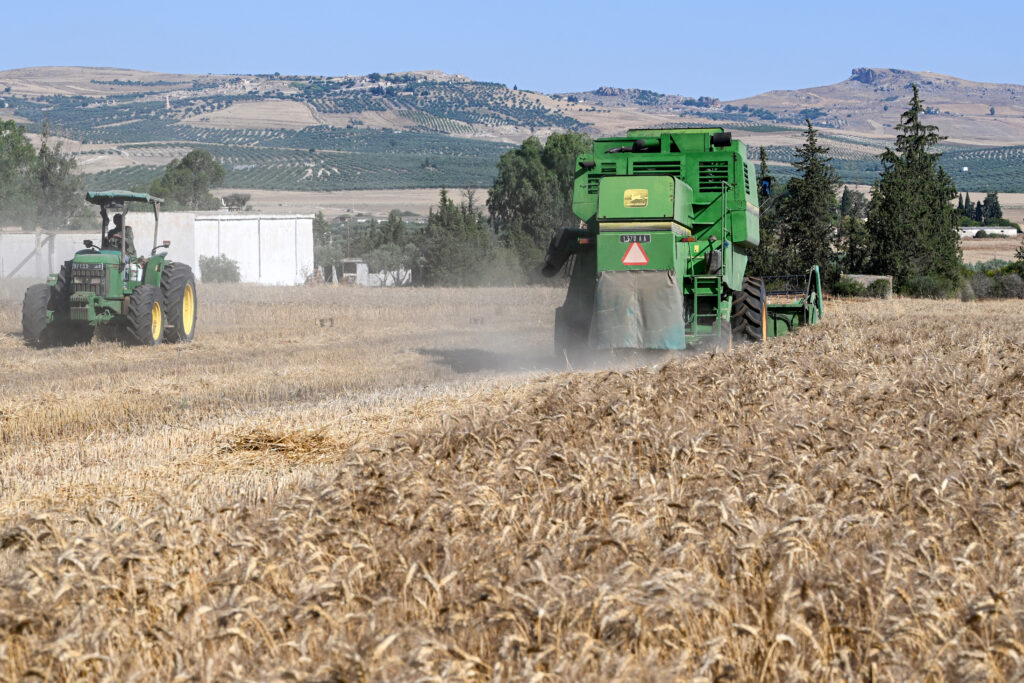
Photo above: A combine harvester and a tractor move through a wheat field in Teboursouk in the Beja region of northern Tunisia during the harvest season on July 2, 2025. Source: Fethi Belaid/AFP via Getty Images.
Tunisia
Water Resources Reliability: C
Tunisia’s freshwater is derived from a mix of surface water and groundwater sources, most notably the Medjerda River and the North-Western Sahara Aquifer System.[46] Yet declines in rainfall due to climate change have pushed the country into drought conditions since 2017, placing it under high risk of water stress.[47] Consequently, in 2023, the per capita share of water in Tunisia dropped to 400 cubic meters per year, well below the United Nations threshold for water poverty of 1,000 cubic meters. During the same year, reservoirs saw their water levels drop below adequate levels, forcing the government to enforce water rationing for the first time in parts of the country, including the capital.[48] Tunisia’s relatively strong institutional capacity has allowed the government to implement such measures and incorporate desalination of both brackish groundwater and seawater into a coordinated response to mitigate the drought-driven decline of its freshwater resources. Since 2024, Tunisia has expanded its desalination capacity with the construction of three new seawater desalination plants, in Zarat, Sfax, and Sousse. Currently, all of Tunisia’s desalination plants contribute approximately 6% of the nation’s potable water supply, with national goals of increasing this contribution to 30% by 2030.[49]
Water Use Efficiency: B-
There is significant room for improvement when it comes to Tunisia’s agricultural water use efficiency. During the 2010-16 period, the water use efficiency of irrigated areas varied between 38% and 85%, with a relatively low overall average efficiency of 59%. This is mostly attributed to the fact that only 69% of these irrigated areas had implemented some form of water-saving technology during this period. However, beyond water losses in the agricultural transmission systems, the low water use efficiency is also a result of illegal water diversions and unregistered water meters.[50] Given that 80% of Tunisia’s water resources are consumed by its agricultural industry, this results in vast water losses.[51] Strengthening monitoring systems and enforcing water regulations will be critical for improving agricultural water efficiency. Helping to address this issue is the Irrigated Agriculture Intensification Project, a $170 million endeavor supported by the World Bank (2018-26). The goal of this project is to repair and rehabilitate irrigation networks across Tunisia, especially in underdeveloped and rural areas, to reduce water losses in agriculture and improve crop yields.[52]
Agricultural Land Sustainability: B
Tunisia has about 4.2 million hectares (ha) of cultivated land, accounting for around 26% of its total land area and giving it one of the highest per-capita cultivated land ratios in Africa (0.45 ha per person). Most farming relies on rain-fed agriculture, which remains vulnerable to arid conditions, erratic rainfall, and ongoing soil degradation.[53] Consequently, Tunisia experiences widespread soil erosion, affecting an estimated 3 million ha of its land. Degraded soil loses both cohesion and moisture retention, creating conditions that increase the likelihood of wildfires. In Tunisia’s case, wildfires have contributed to the loss of 26,100 ha of vegetation cover between 2001 and 2023.[54] To help increase resiliency to the effects of drought on agricultural land, farmers in Tunisia have shifted to using more sustainable local seed varieties. Local seeds are more suitable for its climate and have the added benefits of being drought-tolerant, pest-resistant, and capable of producing high crop yields.[55] Going forward, government support programs and agricultural extension services will have an important role to play in promoting the adoption of more climate-resilient crop varieties.
Food Sector Economy: B+
Agriculture remains an important pillar of Tunisia’s economy, contributing 9.3% to GDP and providing employment for 13% of the workforce in 2023.[56] In 2024, the sector demonstrated notable growth, with food exports increasing by 15.8%, driven largely by strong global demand for olive oil, Tunisia’s leading agricultural export.[57] Launched in 2022 with the support of an initial $130 million loan from the World Bank, the Tunisia Emergency Food Security Response Project aimed to strengthen the resilience of the country’s food production sector. The project focused on three key priorities: providing emergency farmer support to mitigate the rising costs of agricultural inputs and production for small dairy and grain producers, carrying out emergency wheat purchases to prevent bread supply disruptions, and enhancing resilience to food security shocks by addressing structural weaknesses in the grain value chain with public support programs for producers and consumers.[58] In 2024, a $300 million supplemental loan to the project was approved by the World Bank to help Tunisia deal with evolving challenges to its food security, such as the compounding effect of persistent drought on agriculture and a poor domestic cereal harvest in 2023.[59] All of these efforts, under Tunisia’s policy framework, support agricultural exports as well as farmer assistance programs and have helped stabilize the sector despite climate pressures.
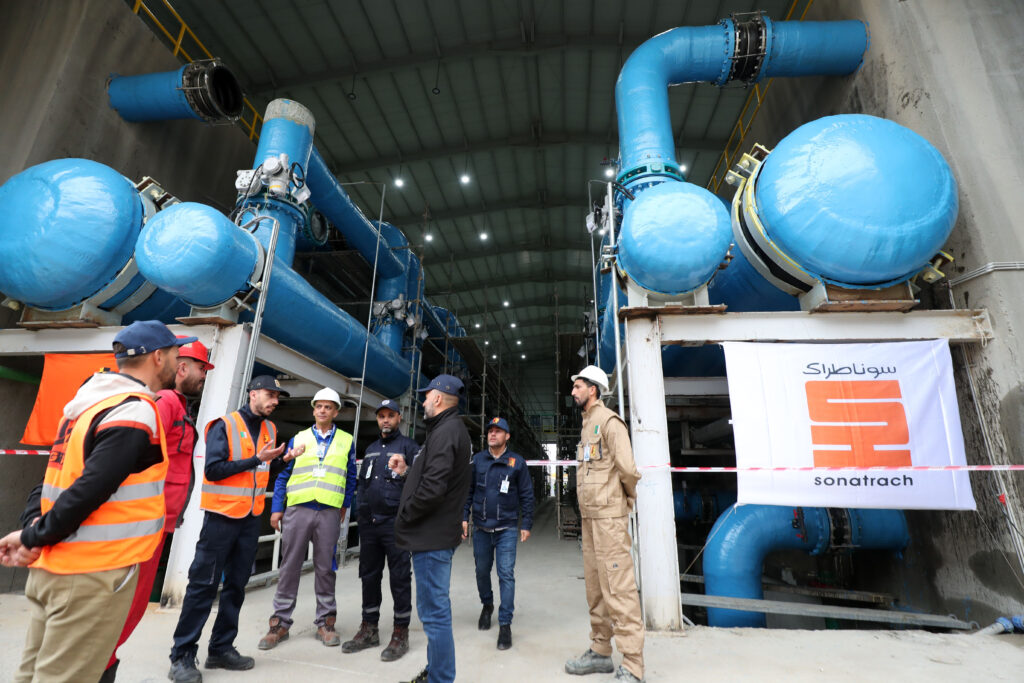
Photo above: A seawater desalination plant in Oran, Algeria, on February 20, 2025. Source: Billel Bensalem/APP via Getty Images.
Algeria
Water Resources Reliability: C+
Algeria’s surface water resources are almost entirely located in the north, where rainfall in higher-elevation mountains such as the Tell Atlas range generates streamflow that supplies the country’s major reservoirs. However, in the south, within the Sahara Desert, there is extreme reliance on groundwater, extracted from aquifers like the North-Western Sahara Aquifer System.[60] Because rainfall in the Sahara is scarce, these deep aquifers receive little to no natural recharge, making them a finite resource that continues to diminish as groundwater extraction increases. The combination of dwindling groundwater supplies and persistent drought means Algeria faces high water stress. The situation became so severe that in 2024, after months of water shortages and rationing, violent riots and protests erupted in the desert city of Tiaret.[61] To combat these ongoing threats to its water security, Algeria is investing heavily in expanding its desalination capacity, reflecting the government’s centralized approach to water management and long-term resource planning. A total of $5.4 billion is being invested to build 11 desalination plants that, once operational, are intended to supply 60% of Algeria’s drinking water demand by 2030.[62]
Water Use Efficiency: B-
Approximately 60% of Algeria’s water supply portfolio is used for agriculture. Studies of horticultural farms in the country estimate an average agricultural water use efficiency of 61%, indicating that there is significant room for farmers to improve efficiency and potentially leverage the saved water to expand crop yields. These studies also found a positive correlation between providing education, technical assistance, and training to farmers with improved water use efficiency.[63] This finding gives Algeria an avenue to boost its agricultural water use efficiency by supporting national policies and programs to invest in farmer education. Algeria’s low water use efficiency is also a byproduct of its extreme water stress conditions. Cuts due to drought have caused delays in farms receiving sufficient volumes of water needed to irrigate their fields. As a result, farmers often overwater their crops when water is available, to compensate for the days when it is not. Expanding agricultural extension programs and strengthening farmer training initiatives could help improve water productivity across the sector.
Agricultural Land Sustainability: C+
Agriculture covers about 18.5% of Algeria’s land, yet farming is increasingly expanding into arid areas, placing growing pressure on water resources, especially since 64% of irrigated lands depend on groundwater. At the same time, urban growth driven partly by state-supported housing construction is encroaching on fertile agricultural areas. Although Algeria has urban planning laws intended to regulate the conversion of farmland, these measures have not curbed the loss of irrigation areas. In practice, urban plans that are designed to protect agricultural land often formalize its incorporation into urban development zones, after which that land is typically diverted from agricultural use.[64] Improving enforcement of land-use regulations and strengthening urban planning institutions will be critical to protecting agricultural land. Algeria is also severely affected by desertification, particularly across its arid and semiarid regions, where prolonged droughts combine with challenges such as overgrazing, the expansion of residential areas, and deforestation. Each year, the country loses thousands of hectares of arable land, while many additional areas become increasingly vulnerable to further degradation.[65]
Food Sector Economy: B-
Algeria’s agricultural sector, accounting for approximately 14% of its GDP in 2024, is growing rapidly, propelled by rising food demand, government initiatives that boost productivity, and efforts to diversify the economy away from dependence on oil and natural gas.[66] Food consumption is expected to increase by 3.5 million tons annually, prompting farmers to expand production of staple crops like wheat and barley. To support this growth, the government has invested around $1.2 billion in modern agricultural technologies, including precision farming that is expected to raise crop yields by 20%, and $800 million to expand irrigation infrastructure, with the goal of doubling the share of irrigated arable land from 12-13% to 25%. Government investments and modernization programs demonstrate a strategic policy effort to strengthen domestic agricultural production. However, despite these advances, the sector faces significant challenges, including droughts that could reduce food productivity by up to 30% and limited access to financing, with only 20% of smallholder farmers able to secure loans. Nevertheless, ongoing modernization programs, improved water management, and growing interest in sustainable and organic farming suggest a positive outlook for Algeria’s agricultural development and new opportunities for diversified, high-value crop production.[67]
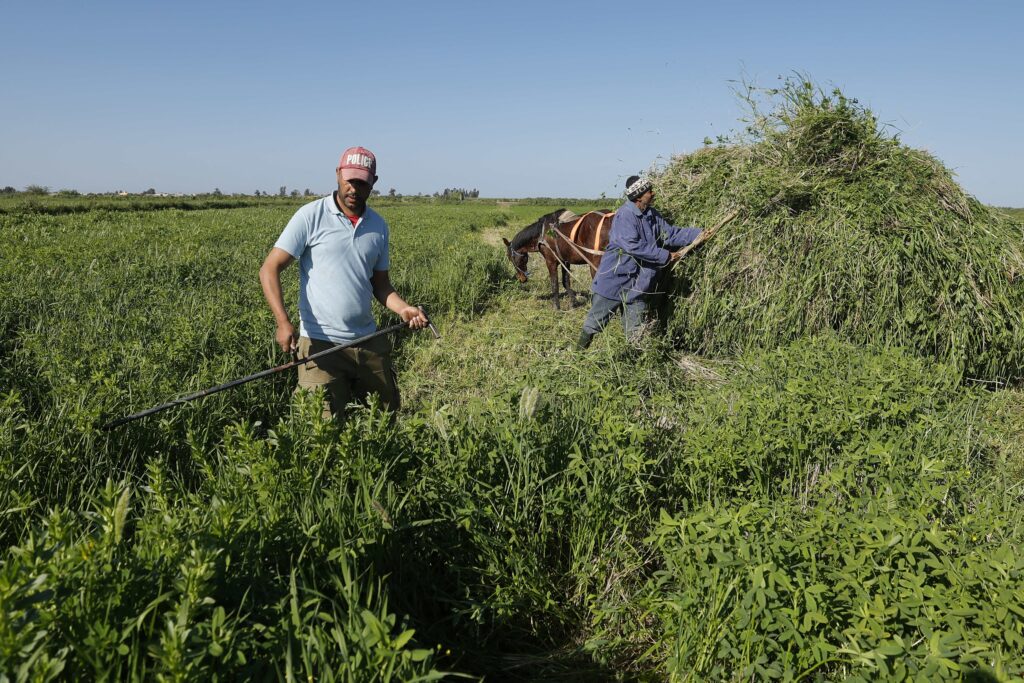
Photo above: Farm workers tend to a field in Morocco’s Kenitra Province on March 28, 2026. Source: Abdel Majid Bziouat/AFP via Getty Images.
Morocco
Water Resources Reliability: B-
Morocco relies primarily on surface water generated from high elevation snowmelt in the Atlas Mountains, with additional water supplies sourced from groundwater aquifers and desalination. The kingdom has faced persistent drought since 2018, and in March 2025 its major dams were only about 38% full, with southern reservoirs dropping to just 10-20% of capacity.[68] And though national reservoir levels have recovered since then to approximately 76% of capacity, offering a reprieve from potential water shortages, the threat of drought remains.[69] With agriculture consuming over 80% of Morocco’s water supply, the sector’s outlook remains highly vulnerable.[70] Without policies to reduce reliance on rainfall and shift water consumption practices, its future performance will depend on uncertain climate conditions and variable precipitation. Yet Morocco’s proactive water governance framework has enabled the country to implement integrated water resource management strategies and large-scale infrastructure investments to mitigate its water scarcity vulnerabilities that are amplified by drought. The kingdom is investing heavily in desalination plants to supply urban centers and coastal agriculture. It currently operates 17 desalination plants, with four more under construction and plans for an additional nine by 2030. Due to uneven rainfall distribution across the country, Morocco is expanding existing inter-regional water transfer infrastructure by 2030 to transport water from rain-abundant northern regions to more drought-prone southern and inland areas, thereby increasing dam storage and supporting agricultural needs in those locations.[71]
Water Use Efficiency: B
To address agricultural water use efficiency, in 2020 Morocco launched the National Program of Water Savings in Irrigation, aiming to modernize irrigation across approximately 550,000 ha, 40% of which fall under large-scale irrigation schemes. Central to this effort is the $150 million World Bank-financed Large-Scale Irrigation Modernization Project, which by December 2022 had reached over 9,000 farmers and 20,000 ha with improved irrigation services and technologies. Building on this experience, the $182 million Resilient and Sustainable Water in Agriculture project, approved in fiscal year 2022, seeks to strengthen water governance, enhance irrigation services, and modernize on-farm technologies in areas facing severe water constraints or overexploited groundwater aquifers. By 2027, the project is expected to benefit more than 23,000 farmers and improve 51,000 ha of agricultural land with new or upgraded irrigation and drainage systems. Strong institutional coordination between agricultural and water agencies has supported the implementation of national irrigation modernization programs. Together, these initiatives aim to promote sustainable water use, improve irrigation efficiency, and help farmers manage seasonal variability in water supplies.[72]
Agricultural Land Sustainability: B-
Morocco continues to lose productive agricultural land due to drought, desertification, overgrazing, and urban expansion, with land degradation affecting 90% of its land.[73] However, government-led agricultural development strategies have played a central role in promoting climate-smart agriculture and sustainable land management. The kingdom is actively investing in sustainable land management, soil conservation, and reforestation through national initiatives such as the Green Morocco Plan (2008-20) and its successor, the Green Generation Plan (2020-30). The Green Morocco Plan has boosted agricultural exports and investments, while promoting water-saving irrigation practices and agricultural resilience, benefiting approximately 2.7 million farmers. The Green Generation Plan also aims to protect Morocco’s forests, which are currently in a degraded state, losing roughly 17,000 ha annually due to overexploitation and unsustainable grazing. By 2030, the plan aims to restore 133,000 ha of degraded forests.[74] Innovative start-up projects like Sand to Green are transforming degraded desert plots into productive ecosystems. Sand to Green’s system regenerates the soil using “green manure” (a blend of compost, microorganisms, and biochar) that enhances fertility and water retention in arid soils. Fruit trees and herbs are then planted together through intercropping and supplied water via drip irrigation to minimize evapotranspiration.[75]
Food Sector Economy: B
Morocco is one of the world’s fastest-growing exporters of fresh fruits and vegetables.[76] Agriculture is a cornerstone of its economy, contributing 15% of GDP and employing 40% of the labor force.[77] The sector is highly sensitive to climate variability, and prolonged drought conditions contributed to a slowdown in the country’s overall GDP growth in 2024. Nonetheless, agricultural GDP growth is projected to expand by 10% in 2026, driven in part by recovery in agricultural yields following improved rainfall in 2025 and expanded use of drought-tolerant crops and irrigation technologies.[78] The government is also looking to reduce dependency on strategic imports such as wheat, which Morocco remains reliant on due to climate-related constraints on domestic production.[79] The kingdom’s long-term agricultural development policies have helped strengthen export competitiveness while supporting rural livelihoods. In 2024, the World Bank approved $250 million for the Morocco Transforming Agri-food Systems Program to strengthen the agricultural sector’s resilience to climate change by promoting climate-smart practices, conservation agriculture, and improved water and soil management. The program also supports the expansion of organic farming to 20,000 ha, helps farmers access markets and increase incomes, and reduces food waste. The program is expected to benefit 120,000 farmers and 1 million consumers, with an additional $5 million grant from the Livable Planet Fund specifically aiding small-scale farmers in transitioning to climate-smart practices.[80]
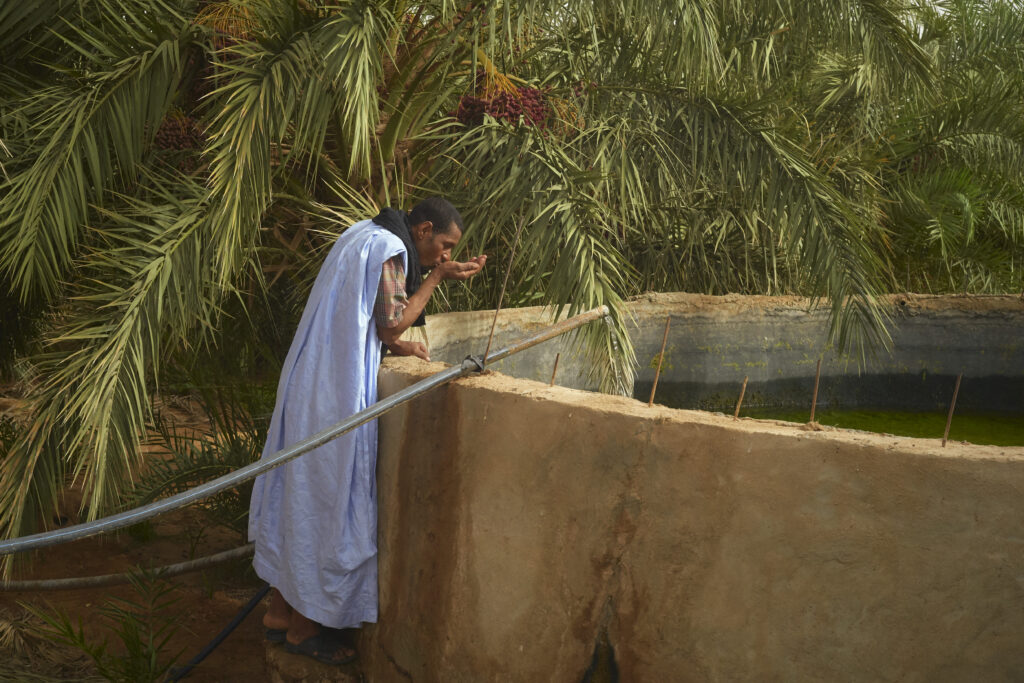
Photo above: A man drinks water from a well in an oasis of date palms in the Adrar region of Mauritania, on June 22, 2024. Source: Michele Cattani/AFP via Getty Images.
Mauritania
Water Resources Reliability: C-
Mauritania faces acute freshwater scarcity, with highly uneven water access and distribution across the country.[81] The Senegal River, its most vital surface water resource, supports much of its agricultural activity. Groundwater is the primary source of supply in areas beyond the Senegal River floodplain, but aquifers are often deep, isolated, and poorly replenished.[82] Limited institutional capacity and infrastructure development also constrain the country’s ability to manage water resources effectively. Mauritania has the option to tap into coastal desalination for additional water, but its current desalination capacity is rather modest (up to 5,000 cubic meters per day). However, there are plans to build a desalination plant capable of producing up to 50,000 cubic meters per day in the city of Nouadhibou.[83] According to recent estimates, agriculture accounts for more than 75% of Mauritania’s total water use, suggesting that any decline in the reliability of water resources would have an immediate and significant impact on its agricultural production.[84]
Water Use Efficiency: C-
When it comes to local irrigation efficiency, there is significant room for improvement. Previous studies found wide variability in irrigation and water use efficiency across many irrigation schemes assessed along the Senegal River Valley in Mauritania. Water use efficiency in these areas was constrained by inconsistent water supply, high energy costs, and suboptimal irrigation practices that collectively contributed to notable gaps between current and potential crop yields (based on water use efficiency rates without these constraints). Relative irrigation volumes varied sharply, as many irrigation schemes delivered either insufficient water, causing crop stress, or excessive amounts, resulting in waste and higher pumping costs. Water adequacy was also often poor, reflecting a mismatch between water delivered and actual crop needs. Irrigation intensity was uneven, pointing to the underuse of available irrigation infrastructure. Furthermore, water use efficiency showed no strong link to the size of irrigation areas. Large irrigation schemes did not outperform smaller ones in terms of efficiency, and average performance was comparable across all scales. However, small schemes exhibited much greater variability, with some operating efficiently while others faced substantial water management challenges.[85] Strengthening water governance institutions and expanding agricultural extension services will be essential for improving overall irrigation efficiency.
Agricultural Land Sustainability: D+
Much of Mauritania’s population relies on integrated farming systems to holistically manage crop production, forestry, and livestock. However, expanding desertification, unsustainable land practices, and resource depletion are placing increasing pressures on rural communities, diminishing food security and reducing their economic opportunities.[86] Yet Mauritania is actively engaged in several projects to support the sustainability and restoration of its agricultural lands. Many land restoration initiatives will need to rely heavily on community participation though, due to limited national institutional capacity in rural areas. The Support Project for Irrigated Development and Food Security looks to revitalize agricultural production in the country by promoting more sustainable farming practices. Detailed assessments of soil characteristics are utilized to guide farmers on the most appropriate crops for their land, allowing them to improve crop yields while helping restore local agricultural productivity. The initiative also emphasizes community-driven, nature-based solutions like agroforestry and improved soil management.[87] On a more regional scale, Mauritania helped launch the Great Green Wall initiative with several other African countries in 2007 to restore productive lands across North Africa, the Sahel, and the Horn of Africa, although the project has not, so far, achieved significant results.[88] As part of this effort, the Action Against Desertification program in Mauritania supports community-led restoration by providing training on selecting appropriate tree species, identifying optimal planting areas, and managing seeds and products for future harvest.[89]
Food Sector Economy: C
Mauritania’s economy is heavily dependent on agriculture and livestock, which as of 2023 contribute roughly 19% of GDP and represent nearly 33% of national employment, particularly in rural areas.[90] The country relies heavily on imports, especially of staple grains such as wheat, sorghum, and millet, to meet local demand. This dependency leaves it vulnerable to external supply disruptions, international price volatility, and domestic climate-related shocks.[91] Mauritania has been a recipient of several US Department of Agriculture food programs. Under the Food for Progress program, it received 60,000 metric tons of wheat valued at $36.15 million in fiscal year 2023. The country also became a participant in the McGovern-Dole Food for Education program when it was awarded $22.5 million through a five-year project (2019-24), called “The Future is Ours,” aimed at reducing hunger, improving health, and strengthening primary education. A second five-year project, called “Bridging the Future” (2022-27), awarded $28.5 million to Mauritania to expand the efforts of the first project. The subsequent termination of aid programs by the US in 2025 effectively sidelined this program.[92] Moving forward, expanding institutional support for local farmers and strengthening domestic agricultural policy frameworks could help reduce reliance on imported food.
Regional Outlook and Policy Recommendations
Across North Africa, water scarcity, climate change, land degradation, and reliance on imported food are converging to create significant long-term risks for agricultural productivity and food security. While countries demonstrate varying levels of institutional capacity and policy response, the overall outlook suggests that agricultural systems will face increasing constraints in the coming decades.
Water scarcity will remain the defining challenge for agriculture across the region. Declining rainfall, rising temperatures, and prolonged drought conditions are reducing the reliability of surface water supplies while increasing pressure on groundwater aquifers. Several countries, including Morocco, Tunisia, and Algeria, have expanded investments in desalination, water transfers, and other nonconventional water sources. However, these efforts alone will not close the region’s widening water gap. Improving water efficiency in agriculture, which consumes the majority of water resources across North Africa, will be essential for sustaining agricultural output.
Land degradation and desertification also threaten the long-term viability of agricultural lands. Urban expansion, unsustainable farming practices, and soil degradation are gradually reducing productive farmland, particularly in densely cultivated areas such as Egypt’s Nile Valley and in arid regions across Algeria, Libya, and Mauritania. Climate change is expected to intensify these pressures through increased drought frequency, heat stress, and extreme weather events that accelerate soil erosion and desertification.
At the same time, economic vulnerabilities within the region’s food systems remain significant. Many North African countries rely heavily on imported staple grains, particularly wheat, exposing them to global supply disruptions and price volatility. Recent geopolitical shocks have demonstrated how quickly external events can affect domestic food security and affordability. Strengthening food system resilience will therefore remain a key policy priority.
Despite these pressures, there are important areas of progress. Countries with stronger institutional capacity and long-term policy planning, such as Morocco, Tunisia, and Egypt, have made notable investments in irrigation modernization, water governance reforms, and climate-smart agriculture. These initiatives demonstrate the roles that sustained policy commitments and coordinated investments can play in strengthening agricultural resilience.
Looking ahead, several policy priorities emerge for improving the sustainability of North Africa’s agricultural systems:
Governments should prioritize improving agricultural water use efficiency. Expanding modern irrigation technologies, strengthening irrigation infrastructure management, and improving water accounting systems can significantly reduce water losses while maintaining agricultural productivity.
Countries should continue diversifying water supply portfolios through investments in desalination, wastewater reuse, and other nonconventional water resources. These efforts should be paired with stronger water governance frameworks to ensure sustainable allocation across sectors.
Protecting agricultural land and soil health will be critical. Strengthening land-use planning policies and promoting sustainable land management practices can help reduce soil degradation and limit the conversion of fertile farmland to urban development.
Improving food system resilience will require reducing vulnerability to global market shocks. Diversifying food import sources, expanding grain storage capacity, and strengthening domestic agricultural value chains can help buffer against external disruptions.
Institutional capacity and governance must play a central role in determining the region’s agricultural future. Effective water management, land protection policies, and agricultural modernization efforts all depend on strong institutions capable of coordinating policy implementation across sectors.
Taken together, these priorities underscore that sustaining agriculture in North Africa will require both technological innovation and effective governance. While the region faces significant environmental and economic challenges, coordinated policy reforms and strategic investments can help strengthen the resilience of its agricultural systems in the years ahead.
[23] Mohammed Mahmoud, “Sudan at the Nexus of Transboundary Cooperation on the Nile,” Troubled Waters in Conflict and a Changing Climate: Transboundary Basins Across the Middle East and North Africa, Marawa Daoudy, ed., Carnegie Middle East Center, February 12, 2024.
Mohammed Mahmoud is the CEO and founder of the Climate and Water Initiative as well as the lead for Middle East Climate and Water Policy at the United Nations University Institute for Water, Environment, and Health. He was the founding director of MEI’s former Climate and Water Program. His areas of expertise include climate change adaptation, water policy analysis, and scenario planning.
Additional Photos
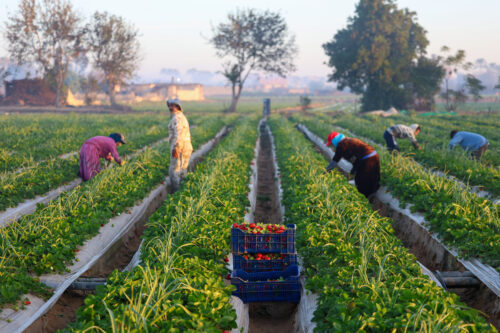
Cover photo: Farmers harvest strawberries in Al-Deir village, Qalyubia Governorate, Egypt, on December 30, 2025. Source: Mahmoud Elkhwas/NurPhoto via Getty Images.
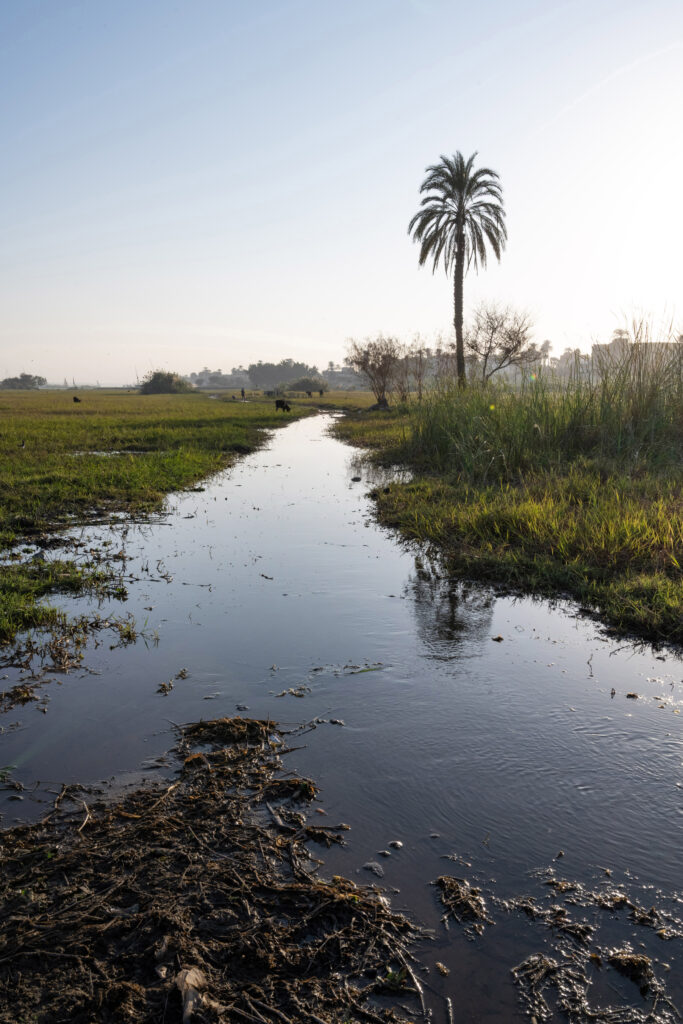
Contents photo: A palm tree set in Egyptian farmland, an alluvial floodplain being used for crops and livestock beside the River Nile. Source: John Wreford/SOPA Images/LightRocket via Getty Images.