Monday Briefing: Iraq’s ongoing cycle of successes and disasters
Read MEI’s weekly briefing featuring expert analysis of key regional developments for the week ahead.
This individual is a guest contributor. MEI is not able to assist with contact requests.
Mike Sexton’s work focuses on the intersection of cyber technology, international security, and governance in the Middle East. He was formerly director of the Cybersecurity Initiative at the Middle East Institute. Mike also served as senior fellow and associate director of the Qatar-America Institute, as senior analyst at the Chertoff Group, and as data manager at the Chicago Project on Security and Threats.
Mike has published articles and reports on cyber attacks, cryptography, and their implications for national security, human security, and international norms. He also serves as a Managing Editor for Charged Affairs, the official journal of Young Professionals in Foreign Policy. He is CompTIA Security+ certified.
He co-edited with Eliza Campbell the MEI-published book, Cyber War & Cyber Peace in the Middle East (October 2020).
Education
MA in Security Studies, Georgetown University; BA in Mathematics (minor in Near Eastern Languages and Civilizations), University of Chicago
Regions of Expertise
Levant and Persian Gulf
Issues of Expertise
Cyber conflict, terrorism, diplomacy
Languages
English, Arabic, Spanish

Read MEI’s weekly briefing featuring expert analysis of key regional developments for the week ahead.
To promote stability in the Middle East and safeguard its interests, the new administration should adopt policies designed to limit damaging activities in cyberspace, support cyber norms in conjunction with strong cooperation agreements, recognize the obstacles to creating a NATO-like regional security alliance, and implement policies restricting the misuse of U.S. technologies by allies to commit human rights violations and spy on their own people.
In a new policy briefing book, entitled The Biden Administration and the Middle East: Policy Recommendations for a Sustainable Way Forward, MEI scholars tackle a large number of country-specific and region-wide issue areas, laying out both the abiding U.S. interests and specific recommendations for Biden administration policies that can further U.S. interests amid a region in turmoil.
Read MEI’s weekly briefing featuring expert analysis of key regional developments for the week ahead.
Contents:
Marvin G. Weinbaum
Director, Afghanistan and Pakistan Studies
باحث ومدير برنامج الفضاء الإلكتروني بمعهد الشرق الأوسط
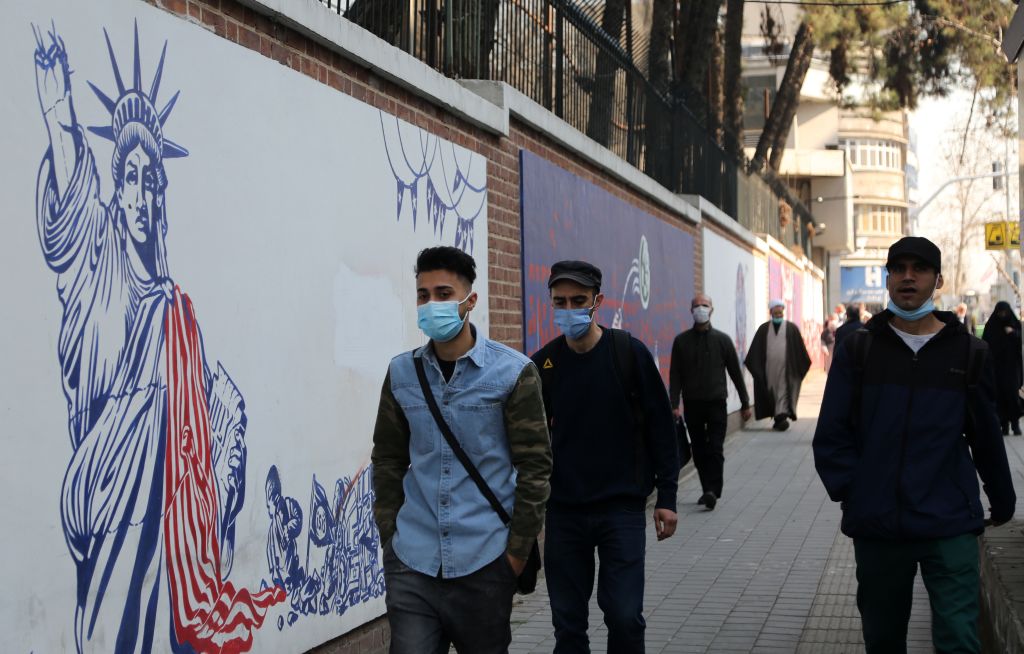
In recent weeks, power outages and severe air pollution have plagued Iran’s major cities.
One underrecognized aspect of Houthi operations that the recent FTO designation brings under scrutiny is their online presence. Ansar Allah maintains accounts on YouTube and Twitter, with 26,300 followers and 16,800 followers respectively. It also has an active group with over 22,000 participants on Telegram, an instant messaging service legally headquartered in London with servers in Dubai. The group even has its own official website.
This new white paper distills the findings of the Middle East Institute panel “State of Play for Middle East Cybersecurity Leaders,” a discussion held in September 2020 about the unique threats, best practices, and corporate landscape in the Middle East and North Africa region.