
Skip to Content

Operations & Policy

This individual is a guest contributor. MEI is not able to assist with contact requests.

Download hi-res photo

Operations & Policy Center

Operations and Policy Center (OPC) is an independent think tank and service provider based in Gaziantep, Turkey. Established in 2014, OPC conducts original research and provides consulting services to enhance policymaking, development programs, and humanitarian response projects. Syrian-led and owned, OPC combines local knowledge with technological and scientific expertise, utilizing in-house statisticians and graphic designers to create original and intuitive final products. After separating from the Dubai-based Orient Research Center and becoming a for-profit company in 2018, OPC has focused on cultivating relationships with governmental and non-governmental bodies working in Syria or with the Syrian diaspora. Currently, OPC is in a stage of growth after significantly upscaling its capabilities due to increased demand from a growing clientele. The OPC is managed by Basel al-Junaidy, while Karam Shaar, who is a Non-Resident Scholar at MEI, is the Research Director.

The Latest from Operations & Policy

Filter by
5 Results
Data shows nowhere in Syria is safe for return
Photo by Muhammed Said/Anadolu Agency via Getty Images
  • Analysis
  • Data shows nowhere in Syria is safe for return

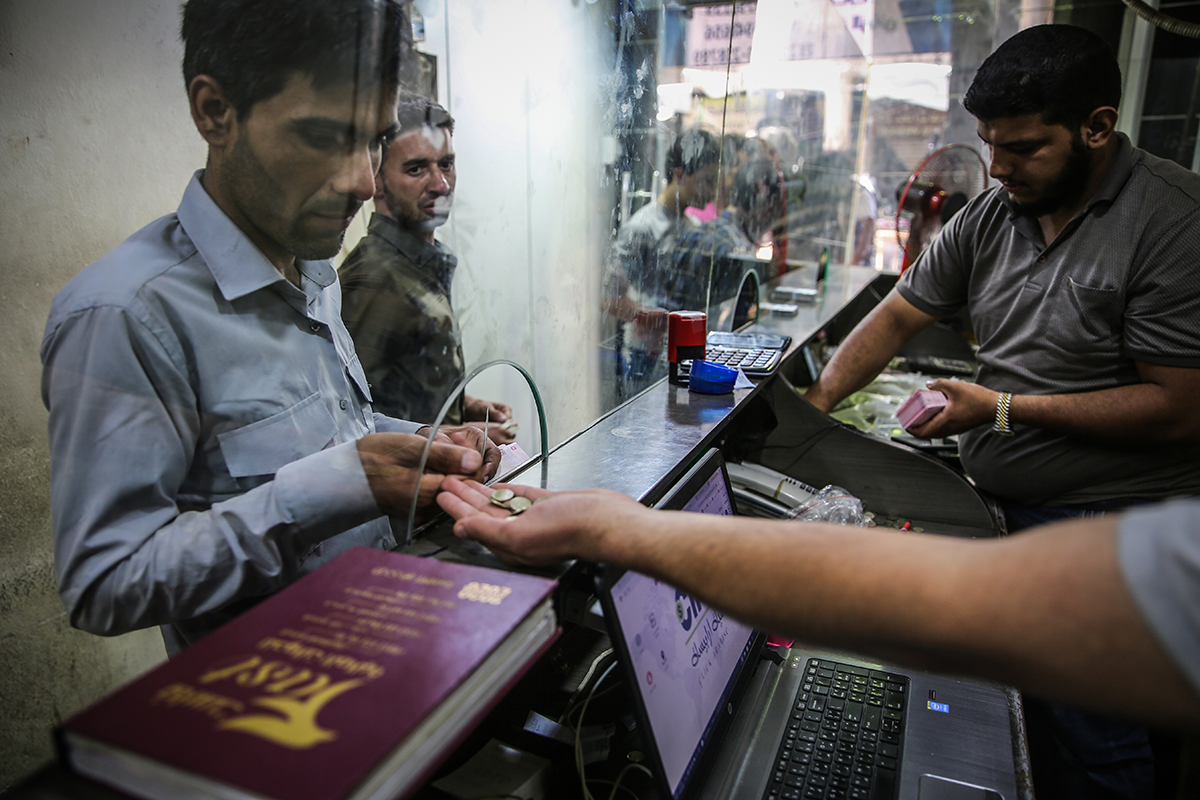
    The past year has seen a trend toward normalization with the Assad regime, accompanied by a push by some nations to force or coerce displaced Syrians to return — or deny them asylum outright. The presumption that Syria is now safe for return is often motivated by political expediency and a false equivalency between “safety” and reduced military operations in a particular area, rather than an in-depth understanding of conditions on the ground and the challenges that returnees face. With pressures for return increasing, the Voices for Displaced Syrians and the Operations and Policy Center undertook a first-of-its-kind research project to establish the minimum frequency and types of violations experienced by returnees throughout the whole of Syria. Despite the known difficulties, the report aimed at obtaining an understanding of at least the minimum frequency with which violations occur, which is a critical step in discussions about return.
    February 22, 2022

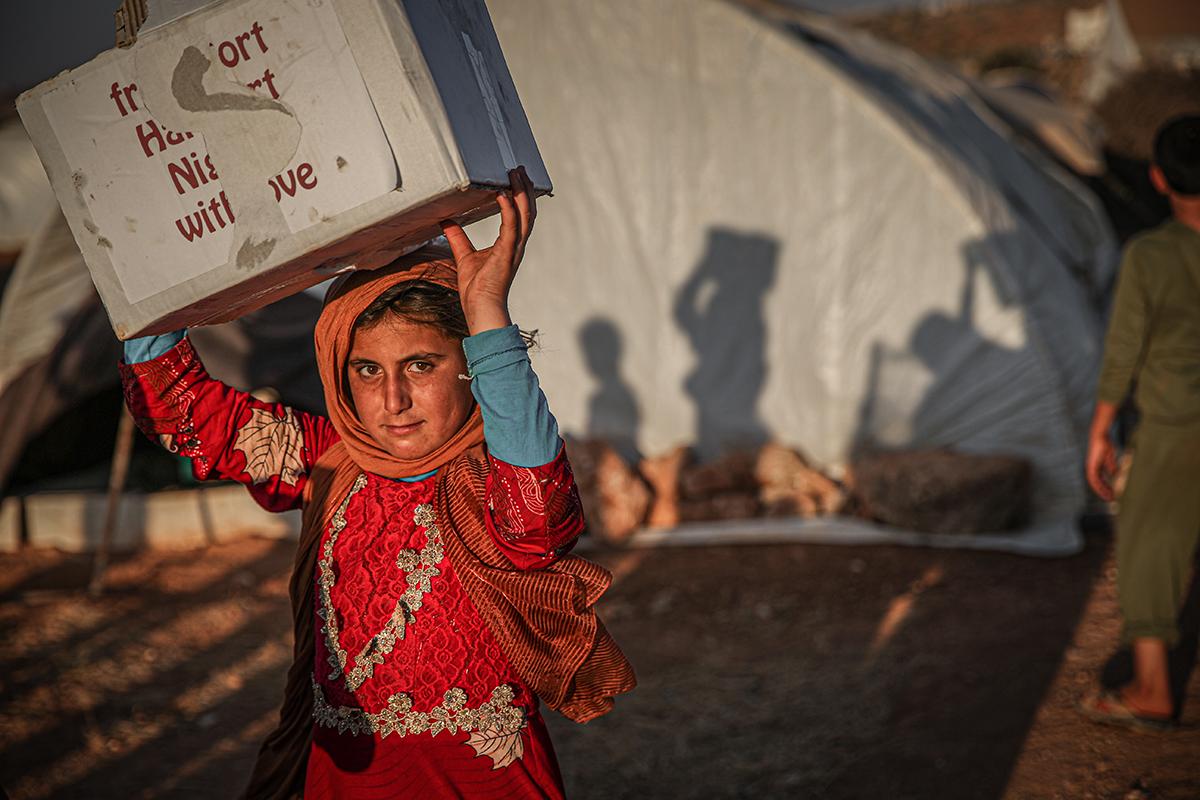
    Three signs of impending famine in Syria absent immediate action
    Photo by Muhammed Said/Anadolu Agency via Getty Images
  • Analysis
  • Three signs of impending famine in Syria absent immediate action

    The pace of military action in Syria has plateaued. With the assumption of a frozen conflict comes the attendant assumption that humanitarian conditions are also likely to be stable. This could not be further from the truth. Humanitarian conditions continue to deteriorate, driven by three factors, and urgent action is now needed to avoid a famine.

    December 10, 2021

    The Economics of Hayat Tahrir al-Sham
    Photo by Anas Alkharboutli/picture alliance via Getty Images
  • Analysis
  • The Economics of Hayat Tahrir al-Sham

    Over the past four years, Hay’at Tahrir al-Sham (HTS) has tried to transform itself from a faction of the Global Jihad movement into the de facto local military and governing power in north-west (NW) Syria. This shift requires the group to seek sources of funding other than al-Qaeda and its donors; consequently, HTS has undertaken a slow but steady takeover of the economy in NW Syria, from financial services and oil and gas to internet and telecommunications. This paper lays out how that process has taken place and provides a detailed look at the economics of HTS.

    June 21, 2021

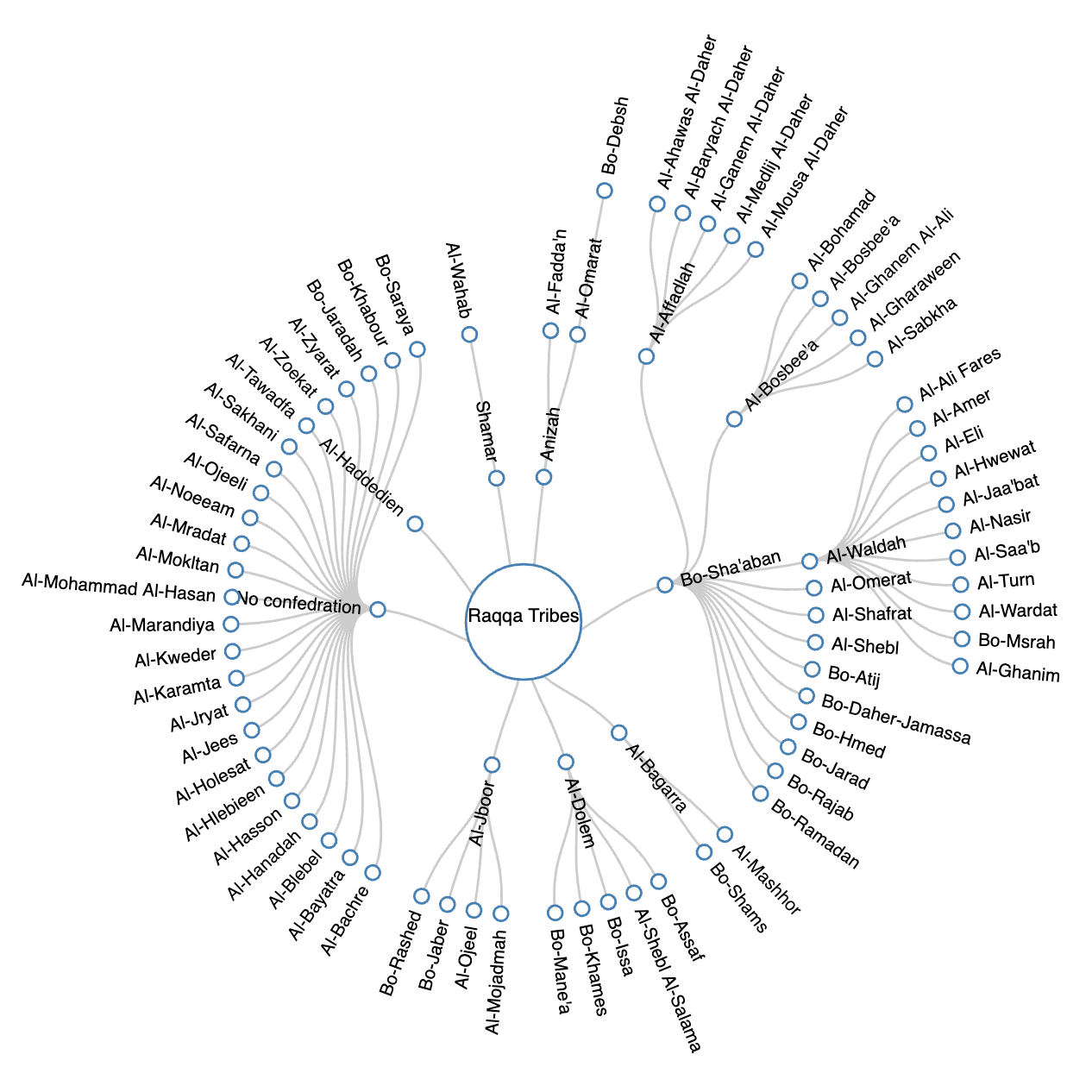
    The Kin Who Count: Mapping Raqqa’s Tribal Topology
  • Analysis
  • The Kin Who Count: Mapping Raqqa’s Tribal Topology

    The northern Syrian governorate of Raqqa came to the world’s attention when it fell under the control of ISIS in 2014. Scenes of tribal leaders pledging allegiance to the group, after their governorate fell into its hands, raised many questions about the complex tribal dynamics in the area. Previous analyses of these dynamics have often misunderstood the intricate tribal structure and drawn false links between terrorism and tribalism. This research tool aims to shed light on Raqqa’s tribal structure, making it accessible to everyone interested in understanding the current state of affairs in the governorate.

    March 24, 2021

    Syrian opinion split on decentralizing power in new constitution
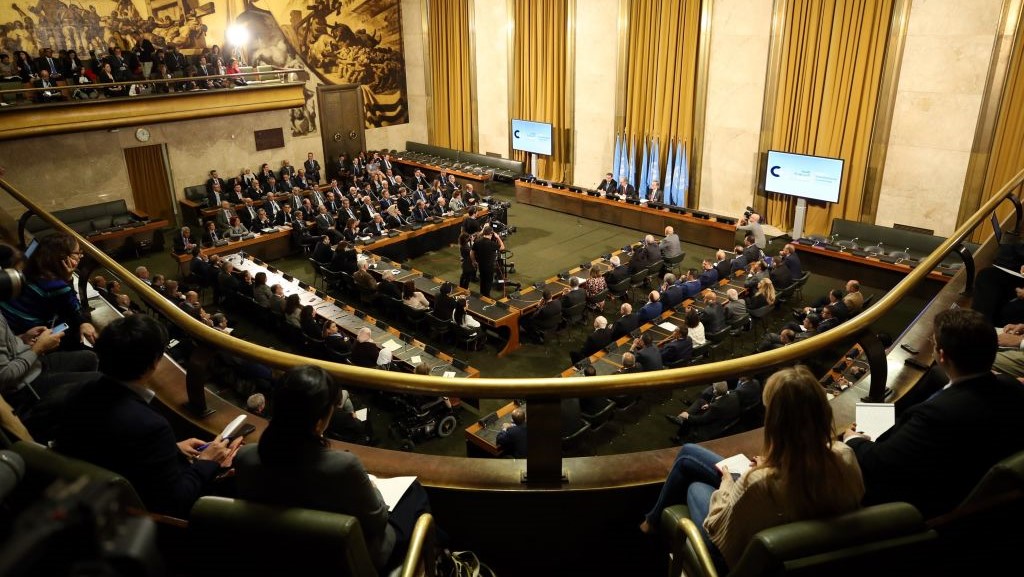
    An view from the balcony of the Syrian Constitutional Committee held in Geneva in 2019.
  • Analysis
  • Syrian opinion split on decentralizing power in new constitution

    Under U.N. Security Council Resolution 2254, a critical step toward a political solution to the Syrian crisis is the drafting of a new Syrian constitution. To that end, the Constitutional Committee in Geneva has conducted three rounds of discussions, with little to show for it. One of the key components of the new constitution is the decentralization of power. The issue is hard for Syrians to approach objectively, however, because — depending on their class, ethnicity, and religion — they have been impacted by the highly centralized system of governance in vastly different ways. In order to understand the different views of Syrians on the issue of decentralization in a new constitution, The Day After (TDA), a Syrian organization that works toward empowering civil society, democratic transition, and justice in Syria, conducted a survey of 2,966 persons between June and July 2020, including Syrians within the country as well as in the diaspora. In general, support for a decentralized political system is on the rise. Compared to a survey conducted by TDA two years earlier, there was an increase of over 20 percentage points among all respondents for a decentralized system in Syria.

    December 10, 2020