This individual is a guest contributor. MEI is not able to assist with contact requests.
Ibrahim Jalal is a former non-resident scholar with the Middle East Institute’s (MEI) Arabian Peninsula Program, and a non-resident at the Malcolm H. Kerr Carnegie Middle East Center.
He has worked with donors and international organizations including the United Nations, the Overseas Development Institute (ODI), and Sussex University’s Institute of Development Studies in research and advisory capacities; occasionally briefs audiences, including think tanks, diplomatic corps, U.N. officials, the private sector, and humanitarian organizations; and takes part in Track II events related to Yemen and the MENA region.
His research examines third-party-led peace and dialogue processes in Yemen, the proliferation of armed non-state actors and implications on peace agreements’ implementation, post-war security orders and stabilization efforts, the politics of social assistance in fragile and conflict-affected states, violent extremism, and the foreign and defense policies of the Gulf and Western states in Yemen. Prior to joining MEI, Ibrahim was a Visiting Scholar at Macquarie University’s Department of Security Studies and Criminology in Australia.
The Hadramawt National Council: A strategic move or a tactical reaction?
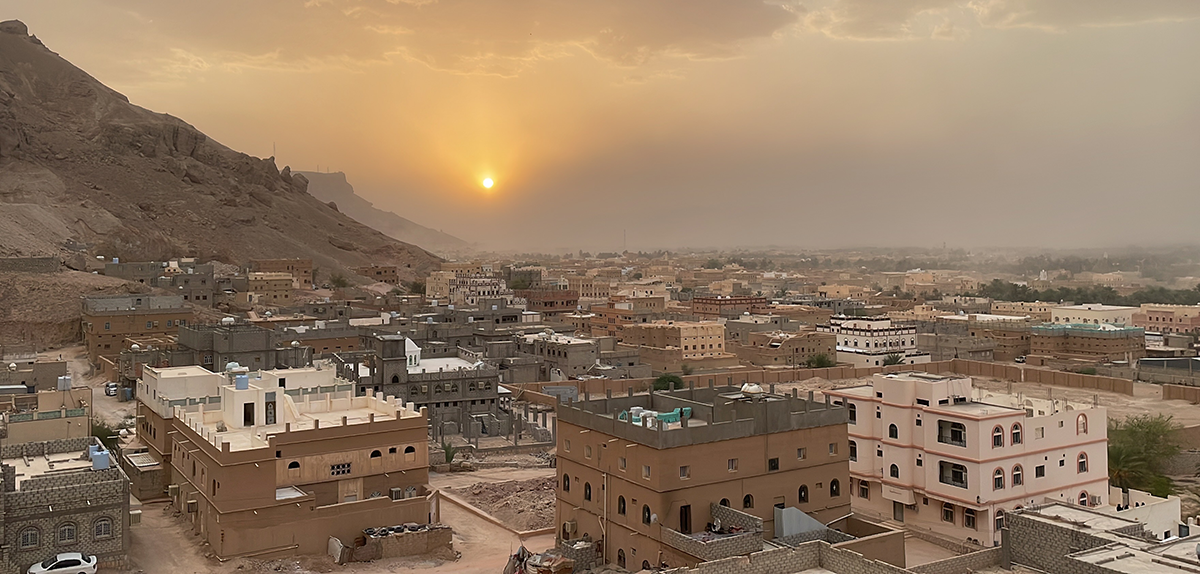
Yemen’s eastern governorate of Hadramawt has long had a distinct regional identity and recent steps, including the signing of a Hadrami Honor Charter and the formation of the Hadramawt National Council (HNC), have underscored Hadramis’ aspirations for greater empowerment and autonomy at a time of growing competition and contestation, both locally and regionally.
Gaza war hasn’t halted de-escalation efforts in Yemen
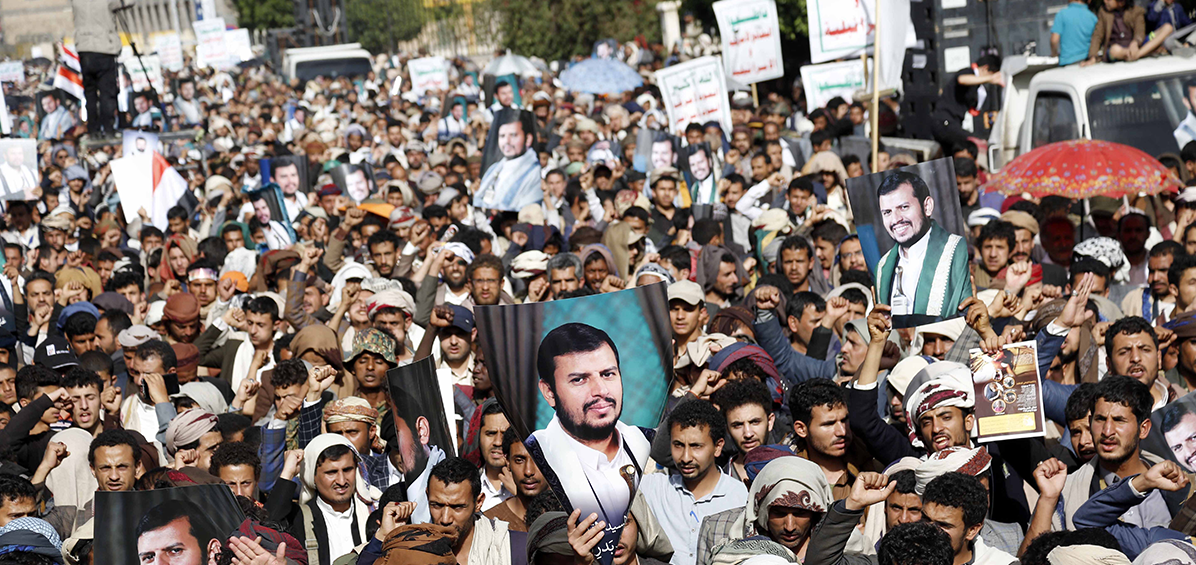
Over the past two months, the Houthi rebels in Yemen have launched missiles and drones into Israel, attacked several commercial ships in the Red Sea, and threatened to block all ships sailing to Israel, regardless of nationality, until Gaza receives humanitarian aid. In the Gulf, there is a growing fear that the situation could constrain ongoing de-escalation talks between Riyadh, the Republic of Yemen Government, and the Houthis, or even take them back to square one were conflict dynamics to escalate.
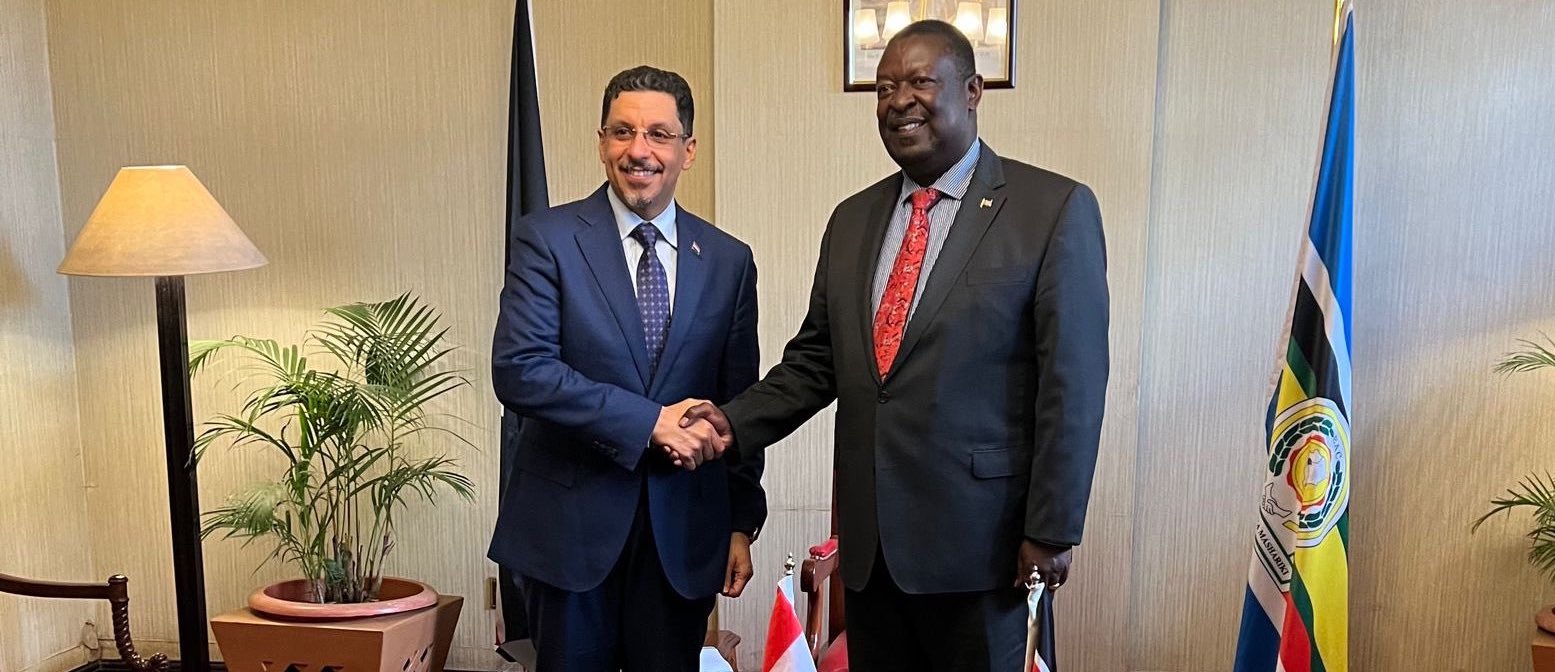
In mid-October 2023, Yemen’s foreign minister traveled to Kenya to attend the Munich Leaders Meeting in Nairobi and met with Kenyan officials on the sidelines. Although bilateral ties between the two countries date back centuries, Yemeni-Kenyan relations have yet to reach their full potential. The conclusion of a political consultation agreement would pave the way for the resumption of ministerial-level bilateral committees between the two governments.
The Houthis’ Red Sea missile and drone attack: Drivers and implications
On Oct. 19, the Pentagon press secretary confirmed that the Iran-backed Houthi militia targeted the USS Carney, an Arleigh Burke-class guided-missile destroyer, in the Red Sea. The USS Carney reportedly intercepted three cruise missiles and several drones without sustaining any damage or casualties. Although the Houthis have yet to claim responsibility for the attack, the drones and missiles were likely fired from north-western, Houthi-held positions in Hodeida and Hajjah governorates on Yemen’s Red Sea coast and were headed “north,” most likely toward Israel.
The war next door: Omani foreign policy toward Yemen
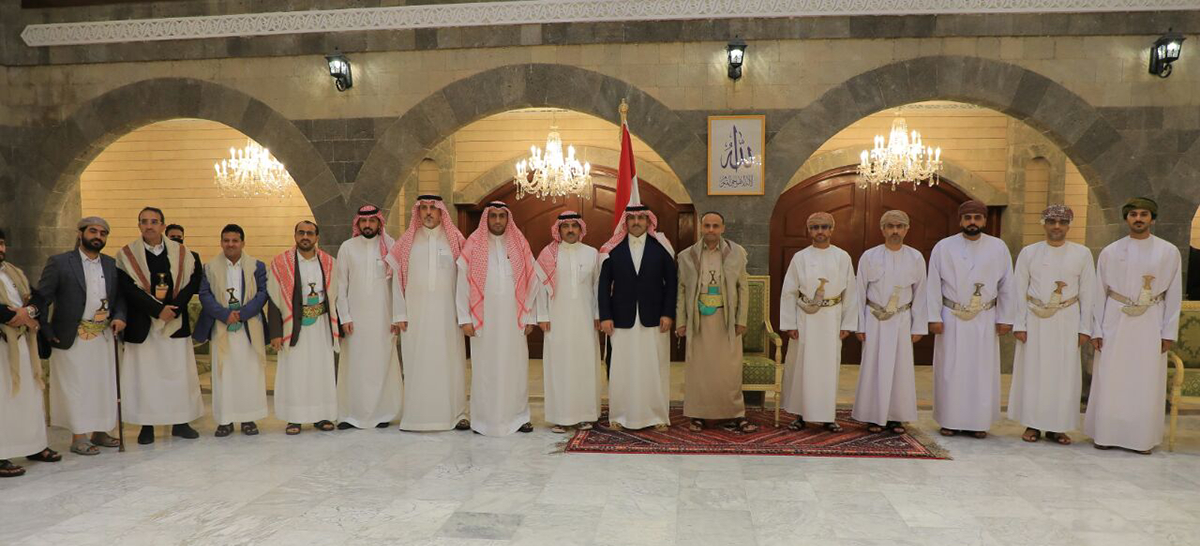
Over the past decade of turmoil, conflict, and external military intervention in Yemen, Oman’s foreign policy has emerged as the Gulf exception. Muscat has pursued a unique role, driven by both pragmatic concern and opportunity. It has harnessed its relations with most of the actors involved, including armed non-state actors, and sought to access new economic opportunities as part of its policies of strategic hedging, omni-balancing, and undeclared alignment.
The Houthi partnership model: Is there a strategy behind the tactics?
With the international community viewing the latest “de-escalation roadmap” as paving the way for yet another transitional power-sharing agreement in an effort to “end” Yemen’s protracted conflict, it is useful to review how the Houthis have navigated past partnerships to understand how things may play out in the future.
China and the Saudi-Iran rapprochement: Implications for Yemen
The conclusion of the China-brokered Saudi-Iranian détente on March 10, which aims to thaw long-standing enmity and manage competition between the two regional arch rivals, has multi-layered implications for Yemen.
Under pressure: Houthis target Yemeni government with economic warfare
Even as the Iran-backed Houthi rebels pursue back-channel talks with Saudi Arabia as Riyadh looks for a major de-escalation in the coming weeks, they have also been ratcheting up the pressure on the internationally recognized Republic of Yemen Government. The Houthis’ strikes on government-controlled critical infrastructure exhibit the same strategic use of Iranian-supported non-conventional warfare tactics seen in their previous cross-border attacks into Saudi Arabia and the United Arab Emirates.
Saudi-Houthi talks could pave the way for intra-Yemeni ones, but will they ensure sustainable peace?
A Saudi-Houthi agreement now looks increasingly likely, but it is highly doubtful that such a deal by itself will end the multi-layered war or build a sustainable peace.
One sided and incomplete, Yemen’s truce faces implementation hurdles as extension deadline nears
The U.N.-sponsored truce of April 2022 is the longest pause in fighting Yemen has experienced since the Houthi armed rebellion broke out in September 2014 and the Saudi-led coalition forces intervened six months later. But although there is strong external interest in both extending and expanding the truce given the scale of turmoil in the global arena, credible progress remains lacking, while serious obstacles persist.
Century-old grievances continue to fester in Yemen’s Tihama region
Grievances have been piling up unaddressed in Tihama, Yemen’s Red Sea coastal plain, for almost a hundred years. Since the revolt of al-Zaraniq against Imam Yahya Hameed al-Din of the Mutawakkilite Kingdom (then North Yemen) in 1925-26, consecutive Imams and the republican elite have pursued policies that have systematically marginalized the Tihamis. They have been deprived of a fair share of their region’s wealth, as well as opportunities for equitable power-sharing and economic empowerment.
Yemen’s Joint Declaration: A bigger repeat of the stalled Hodeida Agreement?
With debate on Yemen in recent weeks focused on the decision by the U.S. State Department to revoke the Houthis’ designation as an FTO, the Joint Declaration (JD) proposal by U.N. Special Envoy for Yemen Martin Griffiths has received relatively little attention. Since the global outbreak of COVID-19 a year ago, the U.N. special envoy has sought to use the urgency engendered by the pandemic to broker a nationwide cease-fire alongside a set of confidence-building measures — branded as the JD — between the Houthi rebels and the Republic of Yemen Government. But the content of the proposal is not new, nor is it a recipe for effective de-escalation and sustainable conflict resolution.