Skip to Content

Abdolrasool Divsallar Divsallar

Expertise

Iran

This individual is a guest contributor. MEI is not able to assist with contact requests.

Abdolrasool Divsallar

Dr. Abdolrasool (Farzam) Divsallar is a political scientist working on the Middle East regional security system with a focus on Iran. Dr. Divsallar is a Senior Researcher at the UN Institute for Disarmament Research (UNIDIR) and an Adjunct Professor at the Universita’ Cattolica del Sacro Cuore in Milan. His area of research lies at the intersection of security and regional studies. Dr. Divsallar’s interests include Iranian military strategy and civil-military relations, Iran’s foreign policy and security decision-making structure, security assistance, and Russia-Iran relations.

Dr. Divsallar co-led the Regional Security Initiative at the European University Institute (EUI) in Florence between 2020 and 2022. In that role he led a combined research and dialogue effort to rethink the security architecture in the Persian Gulf region. Earlier Dr. Divsallar was a Policy Leader Fellow at the EUI School of Transnational Governance. Between 2005 and 2018 he worked in Tehran in various positions, including at the Institute for Middle East Strategic Studies, the Defense Industries Training and Research Institute, and the Center for Strategic Studies.

He received his Ph.D. in political science-Iranian studies from the University of Tehran. He has extensive experience with field work, particularly in Iran’s south-eastern provinces, where he conducted studies on dynamics around the security-development nexus. He has taught both in Iran and Europe and has written and edited eight books, including Struggle for Alliance: Russia and Iran in the Era of War in Ukraine (2024) and Stepping Away from the Abyss: A Gradual Approach Towards a New Security System in the Persian Gulf (2021). Dr. Divsallar has published dozens of academic papers in top international journals, such as Mediterranean Politics, Washington Quarterly, British Journal of Middle Eastern Studies, and The International Spectator.

Areas of expertise
Iran, Persian Gulf region

Issues of expertise
Iran’s military doctrine, Iran-Russia relations, Iran-EU relations, Iran’s foreign policy institutions, international security of the Persian Gulf, comparative security studies, great power politics, non-proliferation and disarmament

Working Language
English, Persian, Italian, Arabic

Selected Publications

Full Publications
ORCID: https://orcid.org/0000-0001-8606-9911
 

The Latest from Abdolrasool Divsallar Divsallar

Filter by
11 Results
From normalization to non-aggression: The next step in Iran-Saudi ties
Photo: ATTA KENARE/AFP VIA GETTY IMAGES
  • Analysis
  • From normalization to non-aggression: The next step in Iran-Saudi ties

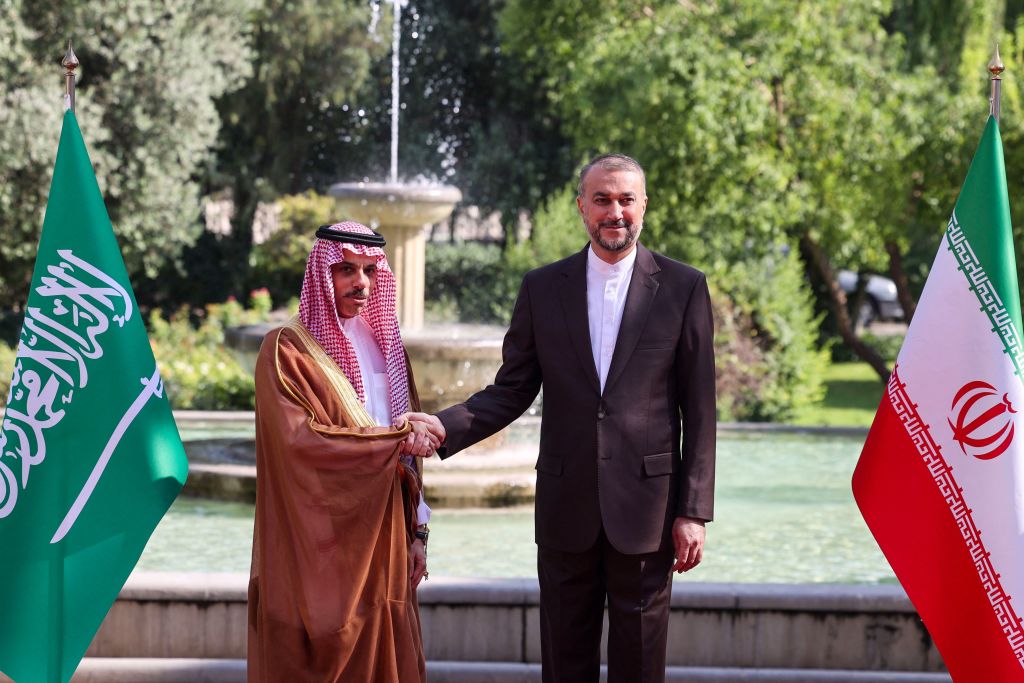
    The groundbreaking March 2023 normalization deal between Saudi Arabia and Iran could potentially reshape the political landscape of the Middle East. It has already paved the way for de-securitization and the resumption of diplomatic relations. However, critical security issues remain unresolved, casting doubt on the long-term sustainability of the process. Capitalizing on this rare opportunity, Riyadh and Tehran should move forward to finalize a comprehensive non-aggression pact as the foundation for their future security relations.

    September 15, 2023

    Can the West Stop Russian-Iranian Convergence?
    Photo by YURI KOCHETKOV/POOL/AFP via Getty Images
  • Analysis
  • Can the West Stop Russian-Iranian Convergence?

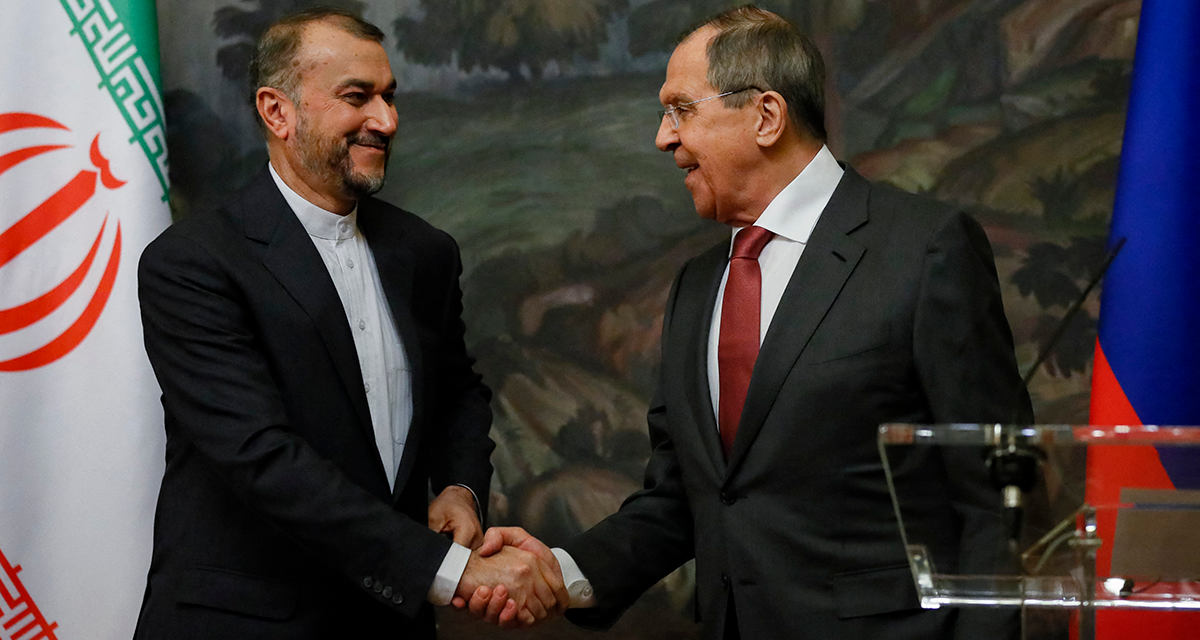
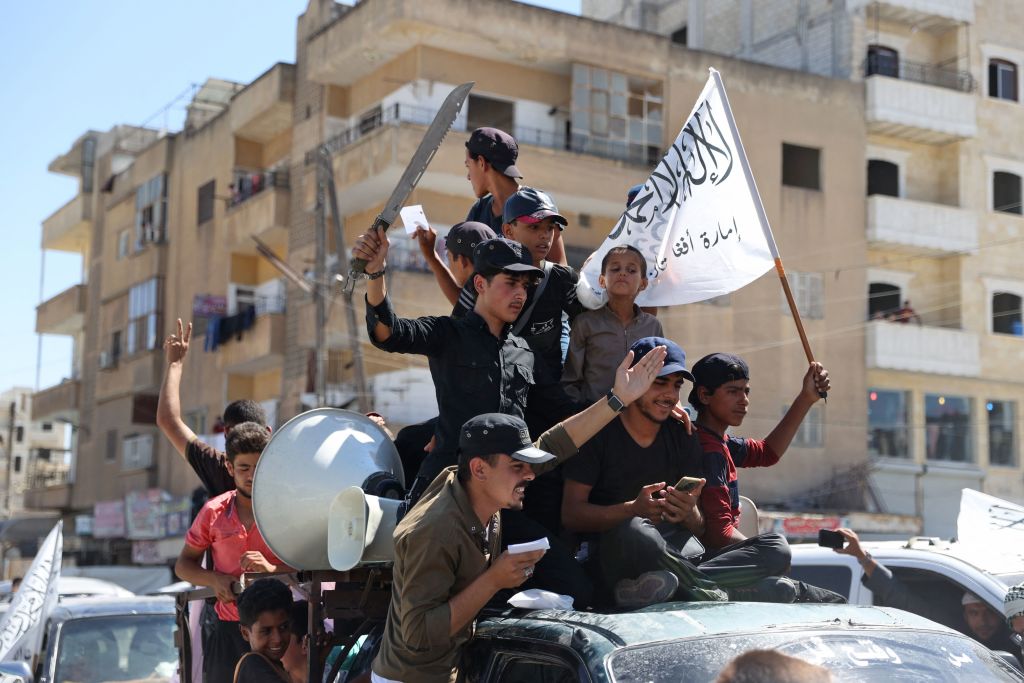
    More than a year on from the beginning of the Ukraine war in February 2022, there is no more business as usual for Russia-Iran relations. While bilateral ties are still characterized by an intense focus on security and defense, the two sides are opening multiple new areas of cooperation as well. But what has motivated Moscow and Tehran to invest in strengthening their bilateral relations given all the potential risks and costs? Could conflicts of interest and competition put a crack in this burgeoning relationship? And what can the West do about it?

    April 3, 2023

    A message to Tehran: What drone attacks on Iranian critical infrastructure tell us
    STRINGER/AFP via Getty Images
  • Analysis
  • A message to Tehran: What drone attacks on Iranian critical infrastructure tell us

    For the first time in several months, Iranian critical military infrastructure again came under attack from an unknown assailant. The Jan. 28 drone attack on a Ministry of Defense workshop complex appeared designed to deliver a politico-strategic message. The strike may mark the beginning of a more unstable post-JCPOA security environment in the Middle East characterized by a return of deterrence and risk-taking behavior.

    February 1, 2023

    Israel’s new Iran strategy complicates regional security
    Photo by MANDEL NGAN/AFP via Getty Images
  • Analysis
  • Israel’s new Iran strategy complicates regional security

    The decades-long confrontation between Israel and Iran is now arguably becoming more dangerous. Amid a lack of consensus among Israeli leaders on how to address this perceived existential threat, calls for applying greater pressure are gaining momentum. The two countries have been engaged in a shadow war for years that includes assassinations, sabotage, kidnappings, and cyber operations, but a new phase of tensions may only bring them closer to a full-scale conflict.  

    July 27, 2022

    Iran is learning from Russia’s use of missiles in Ukraine
    Photo by Stringer/Anadolu Agency via Getty Images
  • Analysis
  • Iran is learning from Russia’s use of missiles in Ukraine

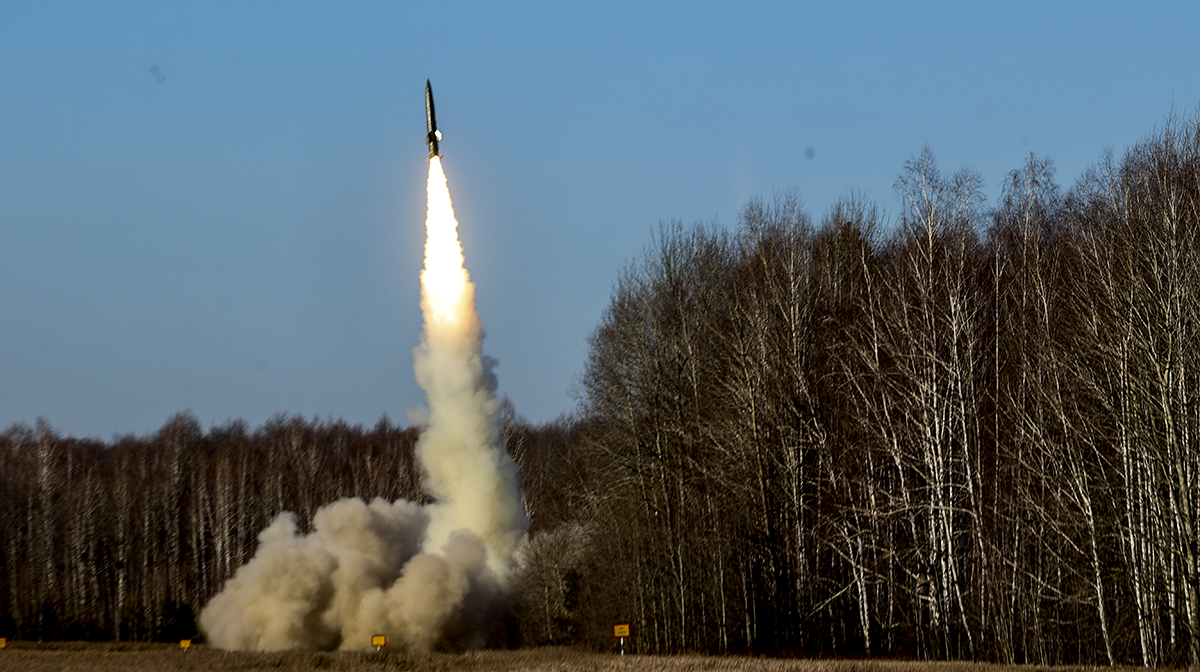
    Russia’s invasion of Ukraine has turned into the largest testing ground for ballistic and cruise missiles in modern warfare. Militaries around the world are watching carefully, and Iran is certainly no exception. With its military doctrine heavily dependent on ballistic missile forces, Iran has a particular interest in the war in Ukraine and is taking notes on Russia’s use of missiles.

    May 2, 2022

    A military strike on Iran is the worst non-proliferation strategy
    Photo by ATTA KENARE/AFP via Getty Images
  • Analysis
  • A military strike on Iran is the worst non-proliferation strategy

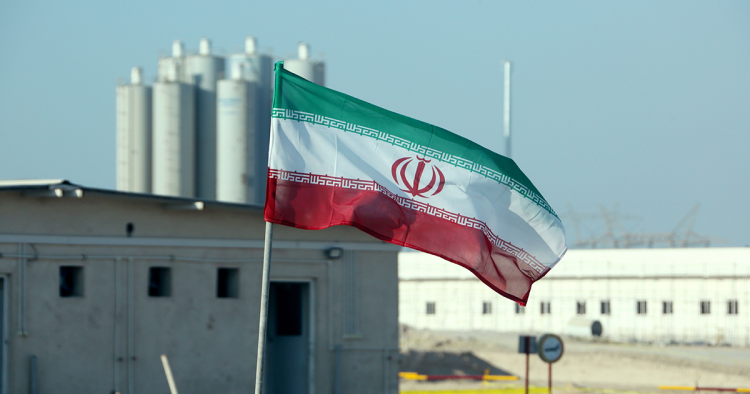
    Debates on a military solution to Iran’s nuclear program are heavily polarized between those arguing that a threat of war and a preventive non-proliferation military strike can be a solution and those arguing that military action will only accelerate Iran’s nuclear program. The truth is that it is highly unlikely that Tehran would abandon its nuclear program after a military strike.

    January 10, 2022

    Why Biden shouldn’t seek to deprive Iran of conventional deterrence
    Photo by Morteza Nikoubazl/NurPhoto via Getty Images
  • Analysis
  • Why Biden shouldn’t seek to deprive Iran of conventional deterrence

    Earlier in February, Iran’s minister of intelligence, Mahmoud Alavi, signaled that if the U.S. continues provoking the country, Tehran might lash out like a “cornered cat” and consider the nuclear option. Will Joe Biden’s late reentry into the JCPOA and the expected resulting increase in tensions influence Iran’s strategic logic on nuclear weapons? A look back at the history of Iran’s decision making on the issue suggests that shifts in military threat assessments are as important as technical developments when it comes to Tehran’s nuclear strategy.

    February 25, 2021