Skip to Content

Elene Janadze

This individual is a guest contributor. MEI is not able to assist with contact requests.

Download hi-res photo

Elene Janadze

Elene Janadze is a Due Diligence Analyst at S-RM, a global intelligence and cyber security consultancy. 

Elene is currently based in London, where her work involves performing open-source investigations and due diligence analysis on matters relating to financial crime, militancy links, sanctions evasion, corruption, political exposure, and terrorism financing. Prior to joining MEI, Elene worked in multiple governmental and non-governmental organizations, ranging from the Embassy of Iraq in Tbilisi to Transparency International Georgia. She also served as an assistant to the ambassador of Georgia to the Czech Republic. 

Elene is a recipient of multiple prestigious scholarships, including the 2022 UK FCDO Studentship Award for the study of Strategic Communications at King’s College London, the 2020 Erasmus grant for the duration of her two-year International Master program, and the 2022 Sir Richard Dearlove scholarship for the study of Intelligence at Cambridge University. She was also selected as a Young Leader in Foreign and Security Policy by the Geneva Center for Security Policy and was awarded as a New Security Leader by the Warsaw Security Forum.

Elene is interested in Russia, the Caucasus, and the Middle East, focusing on great power dynamics, emerging technologies, and Russia’s cyber strategy and disinformation efforts.

The Latest from Elene Janadze

Filter by
2 Results
The digital Middle East: Another front in Russia’s information war
  • Analysis
  • The digital Middle East: Another front in Russia’s information war

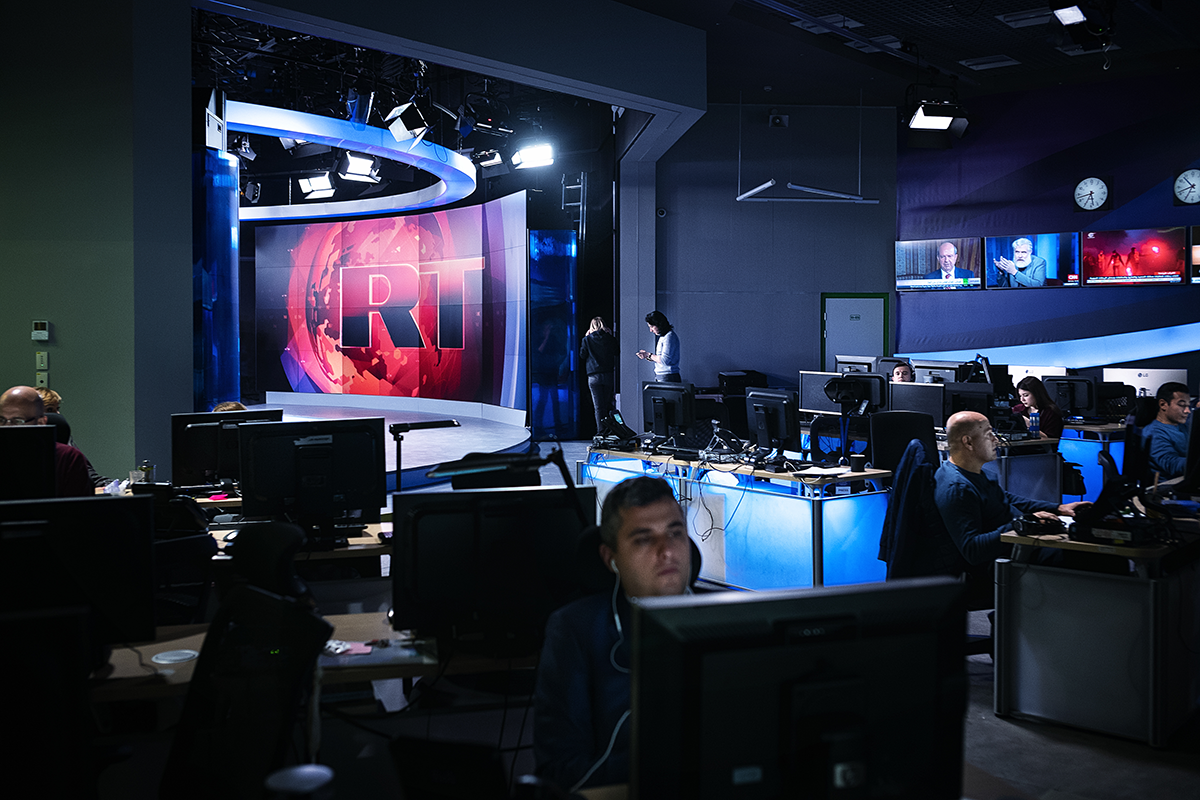
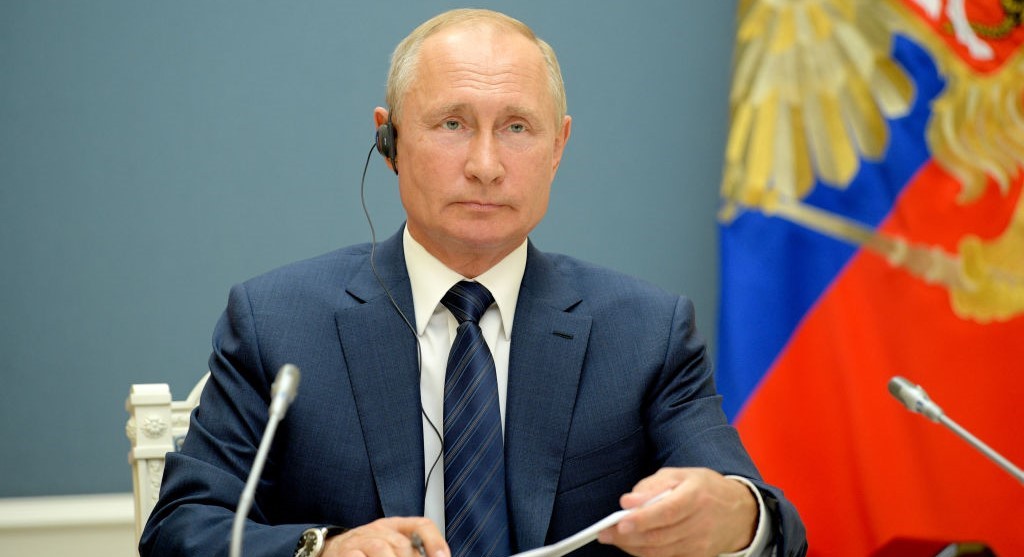
    The Middle East and North Africa (MENA) region, long a target of the Kremlin’s information operations, is being flooded with disinformation from Moscow amid the invasion of Ukraine launched on February 24. Prior to the war, Russia’s President Vladimir Putin gave a lengthy history lesson in his televised speech, claiming that Ukraine was created by Bolshevik Russia, and that it should not exist as an autonomous nation. This conflict has already taken an immense human toll and triggered the largest intra-European refugee crisis since the Second World War. And yet the human impact of the war, the full implications of which remain to be seen, extends beyond the physical world into the virtual realm. As missiles strike Ukrainian cities, a parallel war is being fought online — not only in Russia and Ukraine, but around the world, as the Russian state strives to disseminate its messaging. On the home front, Putin has successfully quarantined his people within an information vacuum through unprecedented crackdowns. In addition to Twitter, Facebook and Instagram, the Kremlin has blocked access to the most popular independent media outlets, forcing hundreds of journalists to flee the country. In response, EU officials have banned content from the Russian-state-owned media outlets Russia Today (RT) and Sputnik across the European Union.

    April 19, 2022

    Russia and the digital Middle East: An old game made new?
    Photo by Alexei DruzhininTASS via Getty Images
  • Analysis
  • Russia and the digital Middle East: An old game made new?

    For over a decade, Russia’s immediate neighborhood has been subject to the vagaries of the Kremlin’s cyber operations. Russia has effectively used cyberspace to advance its adversarial goals, be it through combining cyberattacks with military action during its war with Georgia, or targeting essential power grids in Ukraine. Advancing its cyber capabilities has enabled Russia to reassert its status as a superpower and hit targets anywhere in the world. In recent years, as the use of social media grew, the information war in cyberspace became the Kremlin’s primary tool for discrediting its perceived archenemy: “The West.” The Middle East, with its increasing dependence on social media for news, has also fallen prey to Moscow’s disinformation campaigns. Russia’s main disinformation narratives in the region stem from its Soviet-inherited superpower complex and its broader strategic imperatives on the international stage. 

    September 7, 2021