This individual is a guest contributor. MEI is not able to assist with contact requests.
Jesse Marks is the Associate Director for Middle East and China at Edelman Global Advisory. He is also a Non-resident Fellow with the Stimson Center’s China Program where he focuses on China-Middle East relations, particularly China’s emerging role in conflict management and mediation. From 2020-2022, Marks served as an advisor for Middle East Policy in the Office of the Secretary of Defense, Office of the Under Secretary of Defense for Policy in both the Trump and Biden administrations.
Prior to joining OSD, Marks spent five years in Europe, Asia, and the Middle East as a Boren Scholar, Fulbright Fellow at the Jordan Center for Strategic Studies, Scoville Fellow at the Stimson Center’s Protecting Civilians in Conflict program, and a Schwarzman Scholar at Tsinghua University in Beijing. His work is published with the Washington Post, Carnegie Middle East, Foreign Affairs, Atlantic Council, Middle East Institute, and more. He holds a Masters in Global Affairs from Tsinghua University, Beijing and an MPhil in International Relations and Politics from the University of Cambridge.
Sanctions are lifting, but Syrians still can’t go home
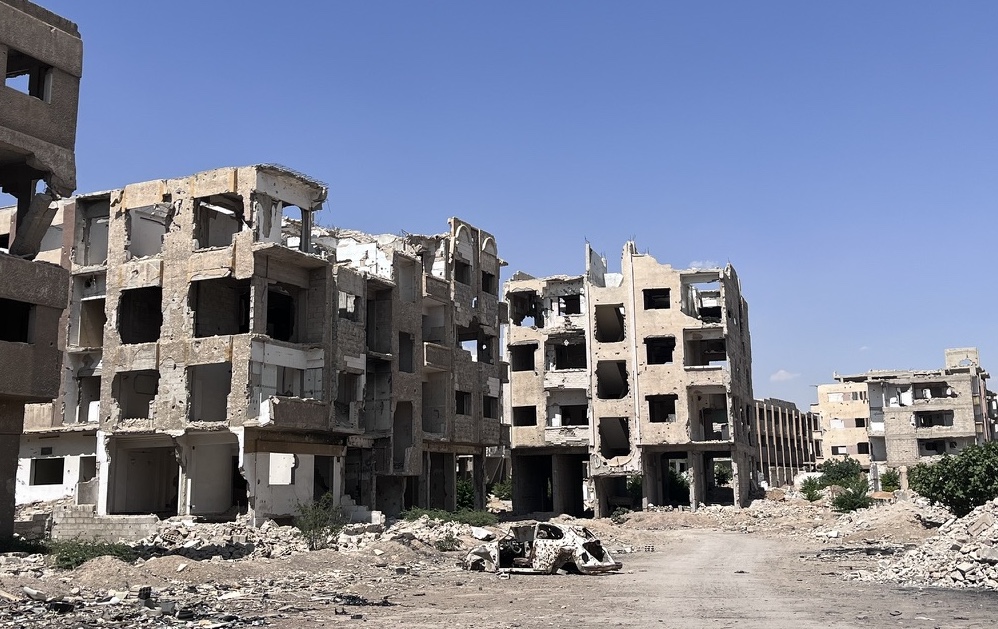
On May 23, President Donald Trump’s administration suspended the majority of sanctions on Syria, marking the most sweeping shift in the policy of the United States toward Damascus in over a decade. But lifting sanctions will not magically make Syria safe for return. For millions of displaced Syrians, their country remains a minefield — literally and bureaucratically.
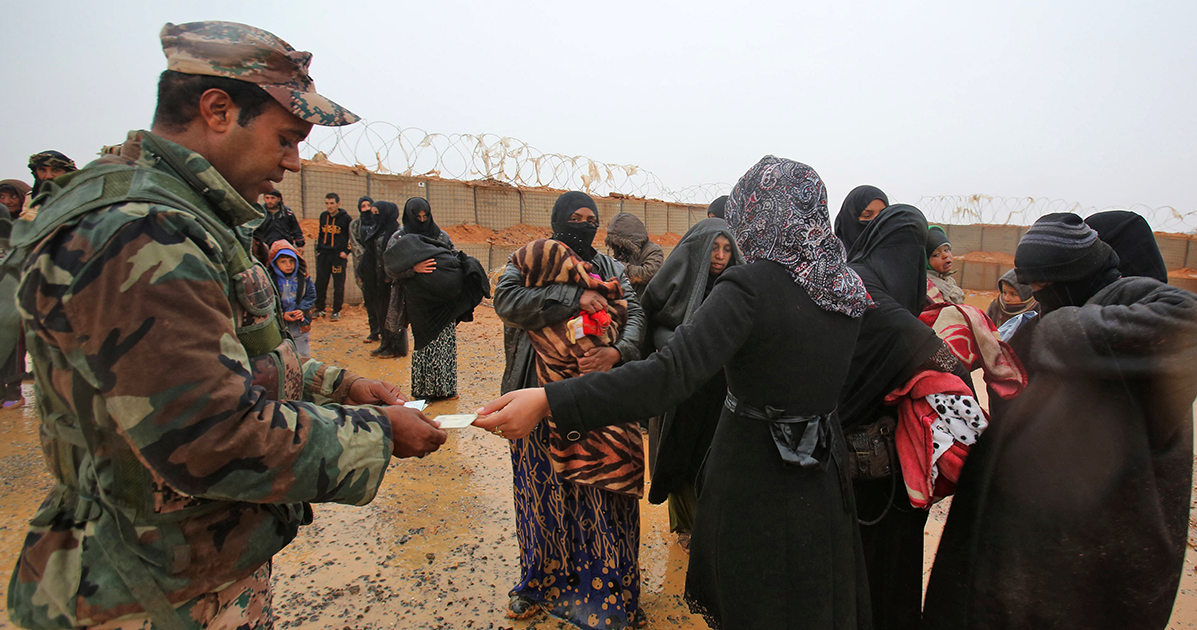
Last month, members of Congress called on the Biden administration to address the eight-year-long humanitarian crisis at Rukban, a desolate informal displacement camp in the eastern Syria desert, just miles from the U.S.-led coalition base at the al-Tanf garrison (ATG). Since 2015, Syria, Jordan, Russia, and the United States have refrained from claiming responsibility for the camp, resulting in a protracted period of inaction with severe humanitarian consequences.
China’s evolving conflict mediation in the Middle East
Since the early 2000s, China has exhibited a degree of flexibility regarding its policy of non-interference in internal affairs, exemplified through a broader series of mediatory efforts in civil wars in the Middle East and North Africa (MENA) region. China’s approach to conflict management has evolved, as have its motivations. This paper examines this evolution through the window of China’s conflict management in Sudan, Libya, and Syria.
China’s Pursuit of a “Strategic Fulcrum” in the Middle East
A great deal of the literature on China’s relations with the Middle East engages the subject through geopolitical analyses that are based mainly, if not exclusively on Western sources and perspectives. This article draws on the work of scholars and thinkers in China’s leading government and party-linked think tanks and foreign policy institutions to shed light on China’s interests and approach to the region — a “competition without confrontation” approach centered on the development of relationships with a select number of key Middle Eastern states that can serve as “strategic fulcrums” (战略支点) for building Chinese influence.