Skip to Content

Kate Seelye

Vice President for Arts & Culture

Press inquiries: [email protected]

Kate Seelye

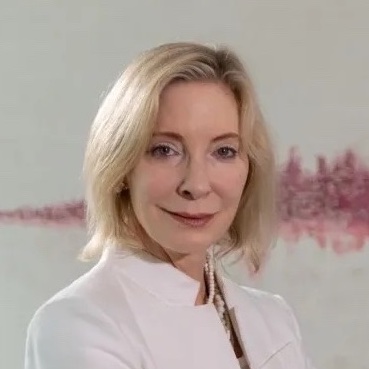
Kate Seelye is vice president for arts & culture at the Middle East Institute (MEI). Since joining MEI in 2009, Seelye has been involved in multiple aspects of the institute’s growth in senior leadership positions. As vice president, she built up its programming and communications departments and later launched its policy center in 2012, which is today ranked as the top Middle East-focused policy center in the United States.

In 2015, she launched MEI’s Arts and Culture program with a focus on exploring the role of the arts in Middle Eastern society and in promoting the importance of cultural diplomacy. In 2019, Seelye launched the MEI Art Gallery, the only gallery in the U.S. capital dedicated to promoting modern and contemporary art from the Middle East. The gallery serves as a hub for exhibits, film screenings, literary panels, and more, introducing the Middle East’s rich cultural scene to U.S. audiences with the goal of promoting deeper connections between the two cultures. 

Over the past decade, Seelye has also organized major cultural conferences in the Middle East, as well as run cultural delegations to the region. She has secured and organized multiple exchange and educational programs. Highlights include a 2016 program to bring Syrian civil society activists to Washington, DC for media trainings, congressional and NSC meetings, policy briefings and more. In 2017 she ran a unique program sponsored by the King Abdul Aziz Center for World Culture, bringing nearly 30 Saudi cultural leaders to 53 U.S. cities for bespoke speaking tours. 

Prior to joining MEI, Seelye worked as a radio and television journalist covering the Arab world from 2000-2009 from her base in Beirut, Lebanon. She reported on the region for National Public Radio, the PRI/BBC show, The World, the PBS documentary show, Frontline/World, and the Channel Four British investigative television news series, Unreported World. Prior to that, she was a producer for the PBS Newshour, based in Los Angeles, after starting her journalism career at the award-winning business program, Marketplace Radio.

In 2004, Seelye was awarded a Fulbright scholarship to research the history of the early Arab-American relationship. That same year, she received an honorary doctorate from her alma mater Amherst College for her efforts to increase American understanding of the Middle East. She is the recipient of several journalism awards, including the Alfred I. duPont-Columbia Award for NPR’s team coverage of the war on Iraq. Seelye spent her childhood in Saudi Arabia, Tunisia, and Syria, where her father served in the U.S. Foreign Service.
The Latest from Kate Seelye

Filter by
7 Results
Little Amal Walks Across America
  • Podcast
  • Little Amal Walks Across America

    MEI’s Senior Vice President Kate Seelye speaks with award-winning theater director and writer Amir Nizar Zuabi – Artistic Director of the ‘Amal Walks Across America’ tour.  They discuss the upcoming U.S. tour of Little Amal, an internationally celebrated 12-foot-tall puppet of a 10-year-old Syrian refugee girl traveling across the world carrying a message of hope and compassion for displaced people everywhere.

    More episodes

    August 28, 2023

    Aleppo’s Musical Heritage Suffers another Loss
  • Analysis
  • Aleppo’s Musical Heritage Suffers another Loss

    Virtuoso French-Swiss qanun player Julien “Jalal Eddine” Weiss, who tirelessly promoted classical Arab and Syrian music to international audiences from his home in Aleppo, Syria, died this month in Paris. Forced to flee Syria’s brutal civil war like millions of other Syrians, Weiss’s death is a sad reminder of the ongoing threat to Aleppo’s rich cultural traditions, as well as an occasion to remember the city’s heritage, which played such an important role in inspiring his unique Middle Eastern compositions.

    January 27, 2015

    Mosul During the Caliphate
  • Analysis
  • Mosul During the Caliphate

    One hundred and sixty-three years before the Islamic State’s band of thugs rolled into the city, terrorizing the city’s minorities, my Protestant missionary ancestor, his wife, and two children settled in Mosul, a long way from the home they left behind in Utica, New York.

    August 12, 2014

    After the Spring, Arab Art Blossoms
  • Analysis
  • After the Spring, Arab Art Blossoms

    In a historic first, three Arab films—all dealing with the political and social challenges faced by Arab youth—were nominated for Academy Awards this past March for best foreign language film (Omar, Palestine), best documentary feature (The Square, Egypt), and best documentary short (Karama Has No Walls, Yemen).

    March 31, 2014

    Egyptian Voters Flex Their Cheops
    Middle East Institute
  • Analysis
  • Egyptian Voters Flex Their Cheops

    The cacophony of bullhorns, fireworks and frenzied cross-country barnstorming in trucks, busses and three-wheeled “tuk-tuks” emblazoned with candidates’ posters has come to an end, and a historic moment has arrived: tens of millions of Egyptians are heading to the polls today in the first democratic presidential election in the country’s history, an election borne out of the 2011 revolution that ousted former President Hosni Mubarak and injected Egyptians with a novel feeling of excitement for participatory democracy.

    May 23, 2012

    How the Arab League Can Save Syria
    Middle East Institute
  • Analysis
  • How the Arab League Can Save Syria

    The Arab League observer mission to Syria—sent under an agreement with the Syrian government to withdraw forces from the cities, release all political prisoners and allow monitors and journalists free movement throughout the country—has utterly failed and should not be extended.

    January 24, 2012