
Skip to Content

Giora Eliraz

Expertise

Egypt

Giora Eliraz headshot

Dr. Giora Eliraz is an Affiliate Instructor at the Jackson School of International Studies, University of Washington, Seattle; Associate Fellow at the Harry S. Truman Institute for the Advancement of Peace, the Hebrew University in Jerusalem; Research Associate at the Forum for Regional Thinking (FORTH); and Research Fellow at the Institute for Counter-Terrorism at the Interdisciplinary Center (IDC), Herzliya.

He is the author of Islam in Indonesia: Modernism, Radicalism and the Middle East Dimension (Brighton & Portland: Sussex Academic Press, 2004) and the monograph Islam and Polity in Indonesia: An Intriguing Case Study (Washington, DC: Hudson Institute, February 2007). In 2008 Dr. Eliraz  was a member of an international research group that focused on religious extremism in Southeast Asia and Australia. He was formerly a Visiting Fellow at the Southeast Asia Centre at the Australian National University in Canberra.

In 2002, Dr. Eliraz completed three decades in the Israeli civil service, Israel Defense Forces (IDF), and Office of the Prime Minister. He has taught at the Tel-Aviv University and the Hebrew University of Jerusalem. He holds a PhD from the Hebrew University of Jerusalem; his doctoral thesis was on “Egyptian Intellectuals in the Face of Tradition and Change, 1919-1939.”


The Latest from Giora Eliraz

Filter by
5 Results
Indonesia and Tunisia: Democracy as a Distinctive Link
Middle East Institute
  • Analysis
  • Indonesia and Tunisia: Democracy as a Distinctive Link

    Not until the early 1950s did ties develop between newly independent Indonesia and Tunisia, then still a French protectorate. Importantly, those ties were based mainly in politics, and not in religion. At the time, the Tunisian national movement, led by Habib Bourguiba, seems to have regarded Indonesia as an inspirational model of anti-colonial struggle. Bourguiba was also attracted to the idea of “non-alignment” advanced by Indonesian President Ahmed Sukarno Indonesia, among others. Today, more than six decades after having achieved independence, Tunisia again stands at a watershed in its political development — transitioning from an authoritarian to a democratic system. These circumstances have given the relationship between Indonesia and Tunisia a fresh tailwind.
    January 30, 2018

    Jakarta’s Political Turmoil: Post-storm Thoughts on the Moderate Muslim Mainstream
  • Analysis
  • Jakarta’s Political Turmoil: Post-storm Thoughts on the Moderate Muslim Mainstream

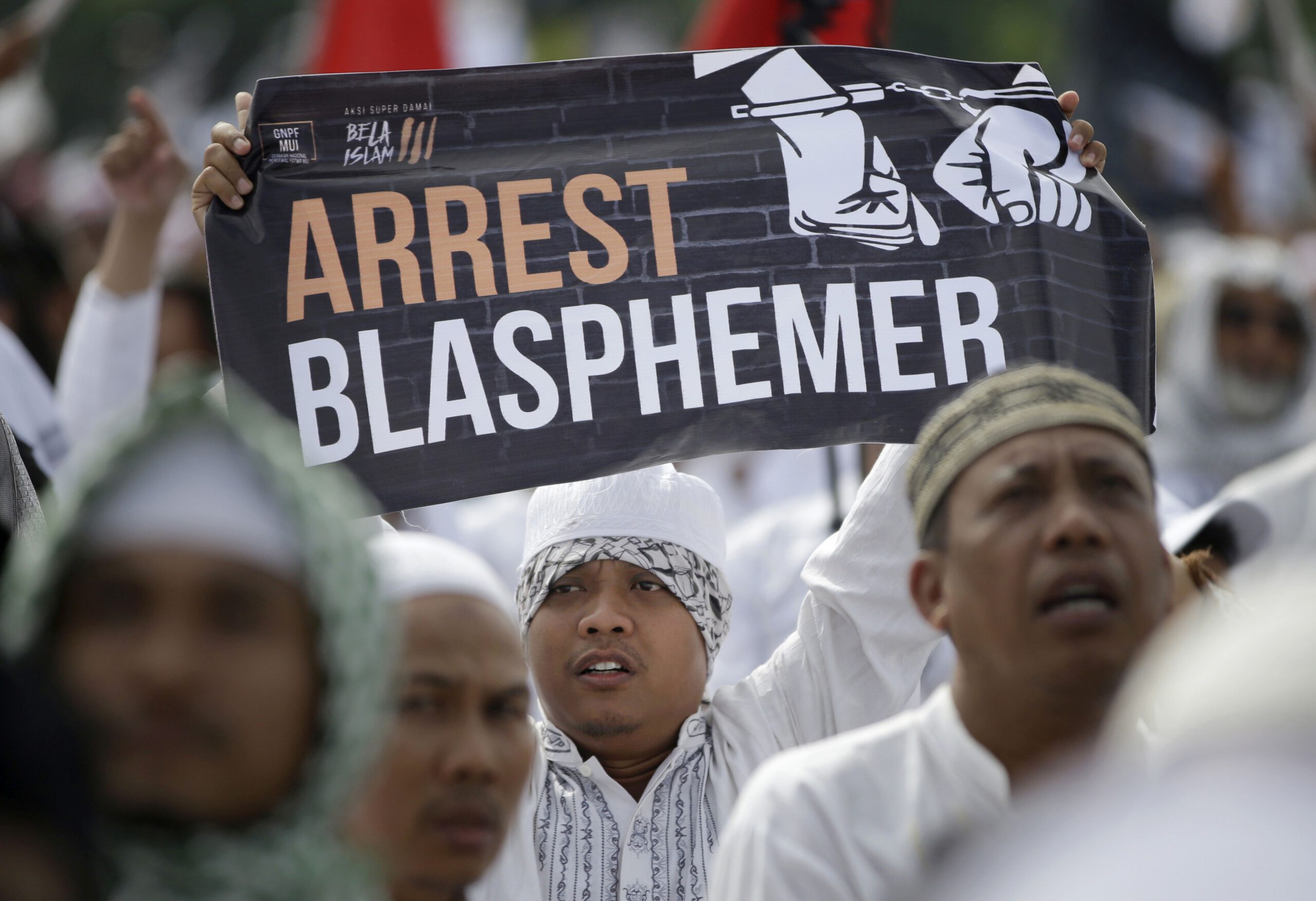
    Jakarta, the hub of Indonesian politics, was caught in the eye of a storm when a series of massive protests erupted, calling for the prosecution of the ethnic Chinese Christian Governor Basuki Tjahaja “Ahok” Purnama for allegedly having committed blasphemy against Islam. What do these developments, together with Ahok’s subsequent defeat for reelection and criminal conviction, signify or portend for Indonesia’s formative values and democratic consolidation? To what extent has the country’s “moderate Muslim mainstream” stepped up to the challenge represented by these events? This essay addresses these questions.

    July 6, 2017

    Indonesia’s Nahdlatul Ulama: A Tolerant, Inclusive Message to the Arab Middle East
    Middle East Institute
  • Analysis
  • Indonesia’s Nahdlatul Ulama: A Tolerant, Inclusive Message to the Arab Middle East

    The current initiative by Nahdlatul Ulama (N.U.)—a traditionalist organization with an estimated membership of over 40 million—to promote globally the notion of Islam Nusantara (Islam of the Indonesian Archipelago) aims to spread, both locally and globally—and to the Arab Middle East in particular—a multifaceted message of a tolerance and moderation in an effort to counter religious extremism and terror. This essay examines the background, substance, and significance of this initiative.

    October 14, 2016

    Activism and Engagement: Envisioning a Possible New Doctrine for Indonesia’s Middle East Policy
  • Analysis
  • Activism and Engagement: Envisioning a Possible New Doctrine for Indonesia’s Middle East Policy

    The Asia-Pacific region, exemplified by the Association of Southeast Asian Nations (ASEAN) countries, has been the cornerstone of Indonesia’s foreign policy, with relationships in the Middle East being of secondary importance. Nevertheless, Indonesia has worked for years to develop fruitful bilateral relations with Arab countries in the economic, religious, and educational spheres.

    July 9, 2015

    Reflections on the Post-Arab Spring Landscape by Sailing in Thoughts to Indonesia
    Middle East Institute
  • Analysis
  • Reflections on the Post-Arab Spring Landscape by Sailing in Thoughts to Indonesia

    While thick dust largely covers the political landscape of the Arab world, some insights for thinking about its future might be offered by examining the case of Indonesia, which surmounted deep political uncertainty and turmoil during the early years of the post-Suharto era.

    October 20, 2014
